

Paper Games for Kids: Give a child a sheet of paper and a crayon and something nearly magical would occur. Some lines of scribble become figures. Shapes become characters. It turns out to be a world of games, stories and imaginations soon that what began as a piece of blank paper, is turned into a world of games, stories and imaginations. The room is filled with laughter and acting unconsciously, children start learning. That is the silent loveliness of paper games.
Paper Games for Kids are not just fun activities. They help children improve focus, creativity, communication, and problem-solving skills. Parents and teachers also love Paper Games for Kids because they are affordable, simple to organize, and enjoyable for all age groups.
Paper Games for Kids are a wonderful alternative to screens, apps, and digital distractions because they encourage creativity, learning, and social interaction. They do not require batteries, internet, and even costly equipment. All they require is a little room, some simple materials and the curiosity of a child. But don’t mistake their simplicity for lack of value. Paper games are greatly involved. They motivate children to think, imaginate, plan and interact. They open the possibilities of creativity and connectivity that many digitized activities are hard to keep up with.
More to the point, paper games are not only about time-killing. They assist children to develop the most vital skills in life, such as solving problems, patience, communication, and emotional understanding. Paper games are a significant activity that enables children to play and develop whether at home, in classrooms, during travel or even in a quiet afternoon.
In this complete guide to Paper Games for Kids, we’ll explain why these simple activities are so useful, revisit classic games, explore creative variations, and share practical tips for parents and teachers. Whether you want screen-free fun, classroom activities, birthday party games, or travel-friendly entertainment, Paper Games for Kids can be used almost anywhere.
Why Are Paper Games for Kids So Beneficial?
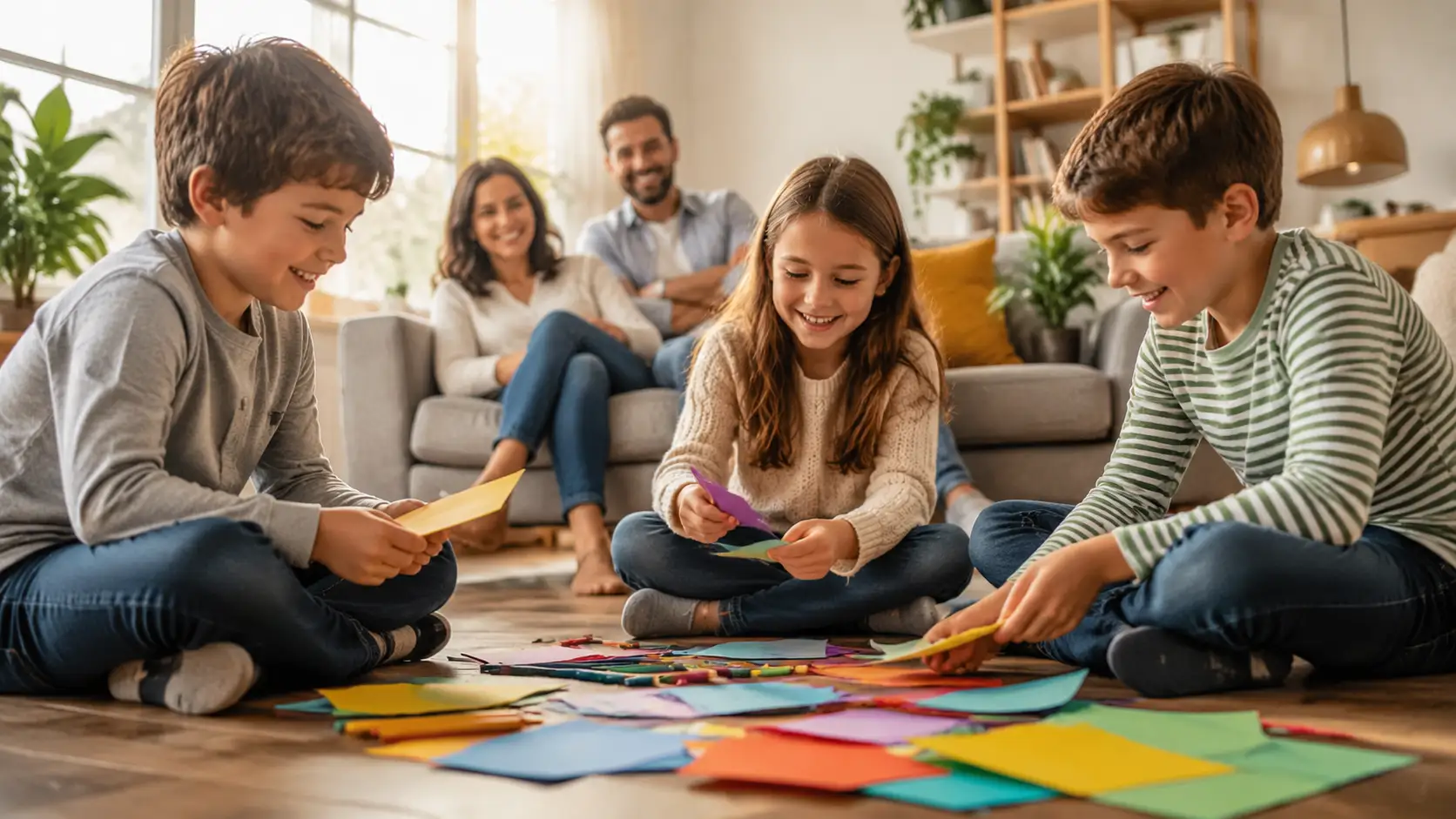
The biggest strength of Paper Games for Kids is that they turn simple play into active learning. Children do not feel like they are studying, but they still practice thinking, planning, drawing, spelling, teamwork, and decision-making.
At first glance, paper games may seem like simple entertainment. But beneath that simplicity lies a powerful learning tool.
They Build Thinking Skills
This is why Paper Games for Kids are useful for both home learning and classroom activities.
Many paper games involve patterns, rules, and decisions. Whether a child is trying to win a round of tic-tac-toe or carefully planning their next move in dots and boxes, they are actively thinking ahead.
They learn to ask questions like:
- What happens if I choose this?
- What might my opponent do next?
- Is there a better strategy?
These small decisions build problem-solving skills and logical thinking over time.
They Improve Focus and Patience
Unlike fast-paced digital games, paper games move at a slower, more thoughtful pace. Children need to pay attention, wait their turn, and stay engaged until the game is complete.
This helps improve concentration and teaches patience—skills that are becoming increasingly important in today’s fast-moving world.
For children who get distracted easily, Paper Games for Kids can create a slower and calmer way to stay engaged.
They Encourage Creativity
A blank sheet of paper can become anything. A maze, a comic strip, a board game, or even a fantasy world.
Paper games give children the freedom to:
- Draw their own ideas
- Create new rules
- Invent entirely new games
There are no limits, and that freedom allows creativity to flourish naturally.
They Support Social Skills
Most paper games are played with others—friends, siblings, or parents. Through these interactions, children learn valuable social lessons:
- Taking turns
- Following rules
- Handling winning and losing
- Communicating clearly
These experiences help children build confidence in social situations.
They Are Calming and Therapeutic
Activities like drawing, solving puzzles, or writing can have a calming effect. Paper games provide a quiet, focused activity that helps children relax while still keeping their minds active.
This makes them a great option during downtime, before bed, or after a busy day.
Classic Paper Games for Kids That Never Get Boring
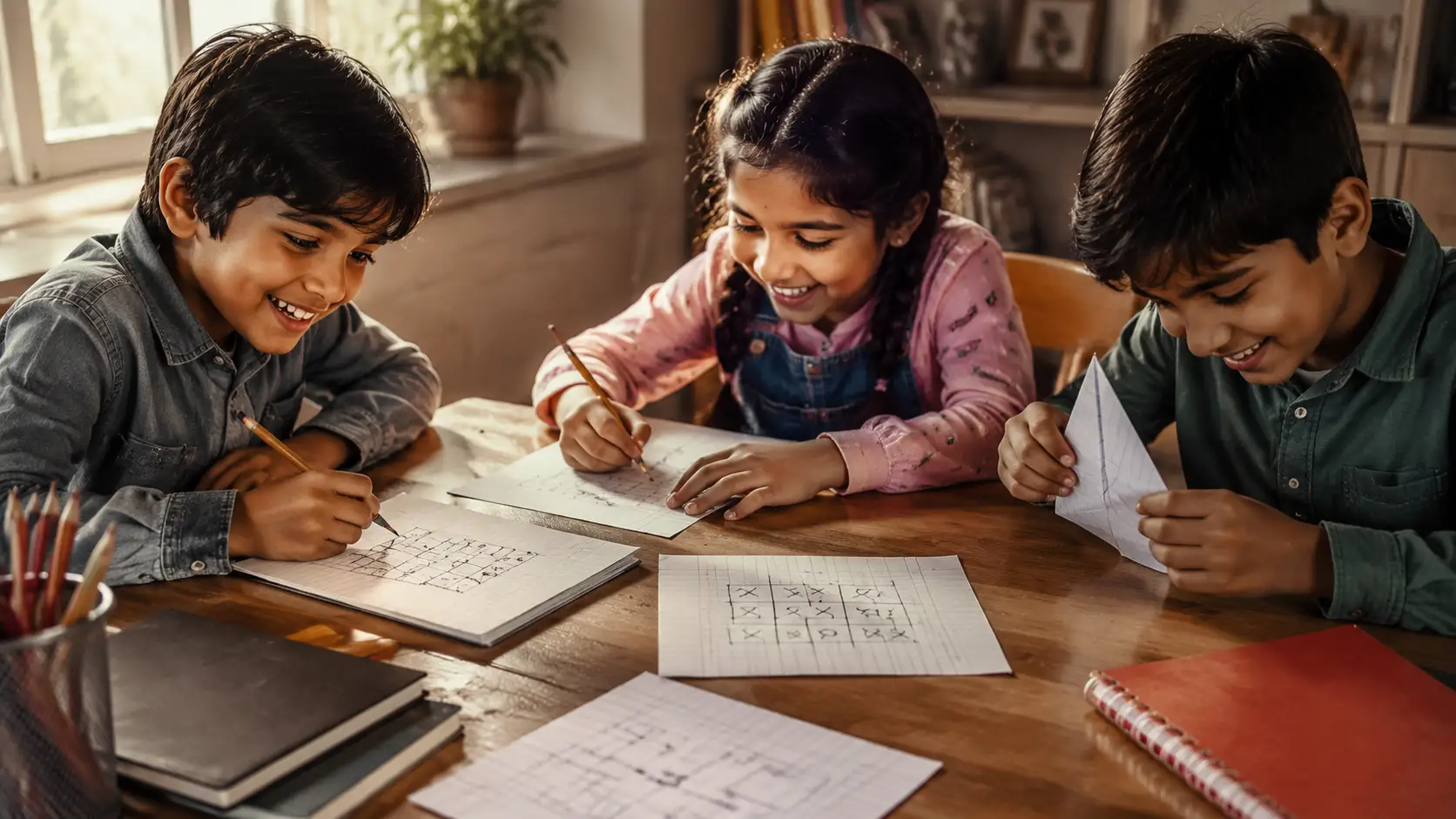
Some Paper Games for Kids never lose their charm. Even with modern toys, mobile games, and digital entertainment everywhere, classic paper games still remain useful because they are simple, flexible, and easy to start. They help children enjoy learning without feeling pressured.
These games are considered to be timeless because they are easy to begin with. Having only a sheet of paper and a pencil, children can jump into a game within a matter of seconds. No complex arrangements and prescriptions, which leads to their ideal use in both an organized activity and free play.
1. Tic-Tac-Toe
Tic-Tac-Toe is one of the most popular Paper Games for Kids because it is simple, quick, and educational.
The first paper game that a child is likely to be introduced to and, quite rightly, is tic-tac-toe. It is fast, simple, and immediate to catch your attention. The players use a grid and alternate turns to place their symbols where they might get three in a row.
Although, at first it might seem, that it is a mere game of dice. However, the more children play, the more they start to recognize patterns. They are taught to anticipate their opponents move, blocking tactics and strategize. This slight change between impulsive playing and calculated decision making will aid in developing early strategic thinking.
It is also an excellent game to play in short bursts of time- playing is ideal when waiting, travelling or on a quick break.
2. Dots and Boxes
Among classic Paper Games for Kids, Dots and Boxes helps improve patience and strategy skills.
The appearance of dots and boxes is deceptive; however, it soon becomes a game of wits and tactics. Players alternate turns to play dots into lines. The aim is to fill in boxes and take them.
The uniqueness of this game is that it gives a lot of patience. At times, the obvious step might not be the optimal one. As children grow, they learn to think a few steps further, not to set up his/her opponent, and be ready to see opportunities when they arise.
It is an excellent means of introducing a concept of strategy without making it seem complex.
3. Hangman
Hangman is one of the best Paper Games for Kids to improve vocabulary and spelling.
Hangman is an entertaining and instructive combination of drawing and word guessing. A player then thinks of a word as the other player then guesses letters. Each incorrect guess adds a part to the drawing.
The game contributes towards the enhancement of spelling, vocabulary and recognition of letters. It brings a level of suspense, as well, which keeps kids on their toes. When playing, children begin to think more seriously about combinations of letters and frequently used patterns of words.
The difficulty level can be easily altered by selecting less difficult or more challenging words so that it can be adapted to other age groups.
4. Pictionary (Paper Version)
Creative Paper Games for Kids like Pictionary encourage imagination and teamwork.
Pictionary evokes creativity and humour. Rather than relying on words, players will draw clues that others will guess. The drawings need not be very perfect in fact, most of the time the fun in the drawings is their being so stupid or unexpected that they amuse.
This game provokes children to think visually and express ideas differently. It also aids in gaining confidence on the part of any kid who might not necessarily feel good when he/she expresses himself/herself using words.
It becomes even more exciting when playing in groups as everyone becomes engaged in guessing and responding.
5. Battleship (Paper Version)
Battleship is a strategic option in Paper Games for Kids that develops memory and planning skills.
The paper version of Battleship is a great means of introducing strategy and logical thinking. Players are provided with grids, and their ships are discretely placed. They then alternate taking guesses to determine the coordinate of their opponent and locate their ships and sink them.
This game involves memory, concentration and planning. Children have to remember about the past guesses and change the strategy on the basis of new information.
Older children are particularly pleased to have access to a little more complex activity.
6. Word Search Creation
Word search creation is one of the easiest Paper Games for Kids to connect with school topics, spelling practice, festivals, animals, places, or family words.
Children can make their own word searches, rather than merely solving puzzles. They select a theme, select words and conceal them in a grid of letters.
This is an activity that integrates creativity and learning. It not only helps in improving the spelling and attention to detail, but children also have a sense of achievement when someone else solves their puzzle.
Puzzles can also be shared with friends or relatives and this will be an added fun to the puzzles.
7. Crossword Puzzles
Crosswords can be modified to adapt to the varying age. In the case of younger children, less word length and fewer clues are the best. Children with higher age may attempt more specific puzzles.
This game enhances vocabulary, spelling and problem solving. It stimulates children to consider the meaning of words and their associations as well.
Crosswords are also excellent Paper Games for Kids because they encourage children to think about word meanings, clues, and spelling together.
One can work on the crosswords together and make it a collaborative task, with the children teaching each other.
8. The Beauty of Timeless Games
The adaptability is what makes these paper games really special. They may be played almost anywhere, at home, in school, during travel or even when waiting to have an appointment. They do not depend on ideal conditions or specific equipment.
They also develop along with the child. A mere game may evolve to be difficult over time as children learn new skills and tactics. This will make the experience new and interesting.
The social bond that these games bring is another crucial factor. Be it a friendly competition or just laughing at one another or something, paper games unite people in such a manner that is natural and relaxed.They provide a degree of concentration and imagination that keeps kids entertained without excess stimulation even when they are played on their own.
Ultimately, these vintage paper games are a reminder that fun does not always require complexity. By using a scrap of paper and a little imagination, children can learn, explore and enjoy themselves in meaningful ways as well.
Creative Paper Games for Kids
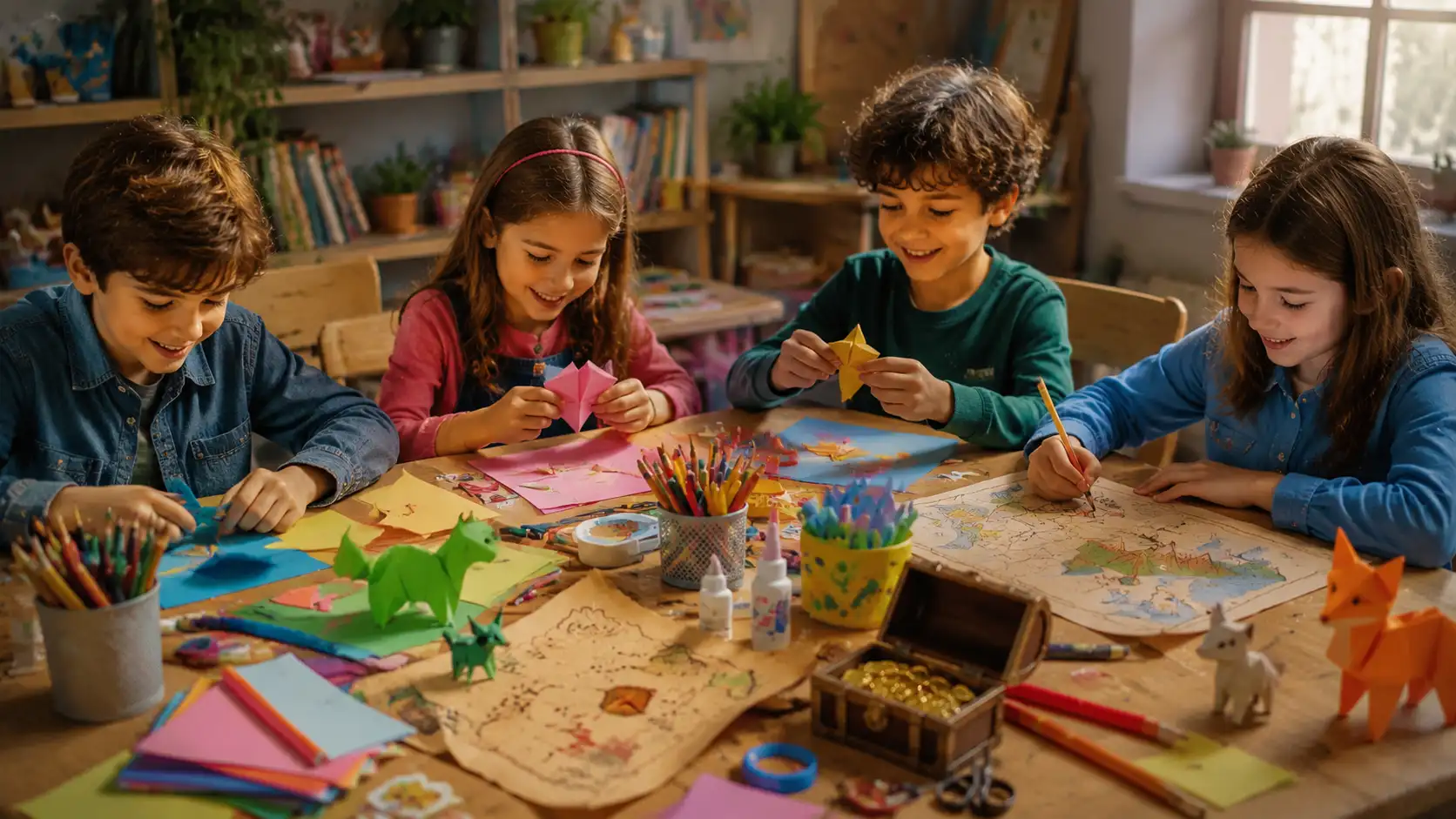
Once children understand the basics, creative Paper Games for Kids can take their imagination even further. These activities are not only about winning; they are about storytelling, designing, drawing, guessing, and creating something original from a blank sheet of paper.
The value of creative paper games is particularly desirable since there is no typical way that one would play the game. Any child may approach the activity in a different way, and thus, the experience becomes more individualized and involved.
1. Story Chain Drawing
Story Chain Drawing is one of the most creative Paper Games for Kids because it combines storytelling, imagination, and drawing.. One child begins to draw a picture or to write a short sentence. Then they fold up the paper so that most of it can be hidden under the paper and only a very small portion of the paper is visible. The following player proceeds with the narrative as per what s/he can observe.
The story typically becomes something utterly unforeseen by the time the paper unfolds. The game promotes imagination, narrative development and demonstrates to children how ideas can develop in unexpected ways.
2. Paper Treasure Hunt
Transform any piece of paper into an adventure map. Draw hints, riddles or little sketches which show the way to go between one thing and another. With each hint, the children are brought near to a final treasure, which may be a toy, a pastry, or even a fun surprise activity.
This game will encourage problem solving and critical thinking. It is also very exciting to play, all the more when it is played in groups. Children enjoy the discovery and movement that comes with clues following.
This makes treasure hunt one of the most exciting Paper Games for Kids for birthdays, classroom fun, family evenings, and holiday activities.
3. Create Your own Board Game
It is here that creativity really comes into play. Children make their own board games or create them themselves:
- Draw the game board
- Create rules
- Include barriers, incentives, or difficulties
They may contain dice rolls, question cards, or even mini tasks in between. This activity enhances not only creativity but also how to plan, organize and make decisions.
It is also rewarding as children get to play something that they themselves created.
Among creative Paper Games for Kids, making a board game is especially powerful because children design the rules, challenges, rewards, and story themselves.
4. Fold and Reveal Game
In this entertaining, yet easy, game, the players draw one part of a character- usually a head, body, or legs- without seeing what the other player has drawn. Once a section is finished the paper is folded and handed on.
The end result when the paper is finally unfolded is often an odd and humorous personality. This game promotes creativity and at the same time it brings a lot of laughter.
5. Maze Making Challenge
Children make their own mazes as opposed to merely solving them. They are able to create a simple or a complex maze with dead ends and other decorations, jungles, castles or space adventures.
Once they make their mazes they can share them with their friends or family in order to solve them. This task develops creative thinking and logical thinking.
Maze making is one of the best Paper Games for Kids for improving patience, planning, and visual problem-solving.
6. Word Ladder Game
The game is best suited to the older children who would enjoy word challenges. The idea is to change one word into another, by altering one letter at a time.
For example:
COLD – CORD – WORD – WARD – WARM
The steps should consist of a real word and this feature makes the game challenging and educational. It enhances vocabulary, spelling, and thinking creatively.
Also Read: Picnic Games
7. Comic Strip Creation
Using paper, children can make their own comic strips. They sketch panels, create characters and write dialogue. It may be a funny or adventure story, or even a story based on real-life events.
This exercise promotes narration, artistic, and sequencing abilities. It also enables children to experiment with emotions and ideas using characters.
8. Paper Puzzle Making
Children are able to create their own puzzles wherein they draw a picture then cut it into parts. The works may be plain forms of the younger children and more intricate designs of older ones.
They are able to replace puzzles with others and attempt to solve one another in their creations. This introduces a cooperative component in the activity.
9. Guess the Drawing
One child will draw something secretly, and others will ask yes-or-no questions to determine what it is. Alternatively, the draw can be uncovered gradually as others make guesses.
This game develops interest, observational and communication skills.
Also Read: One Minute Games
Why Creative Paper Games are Important
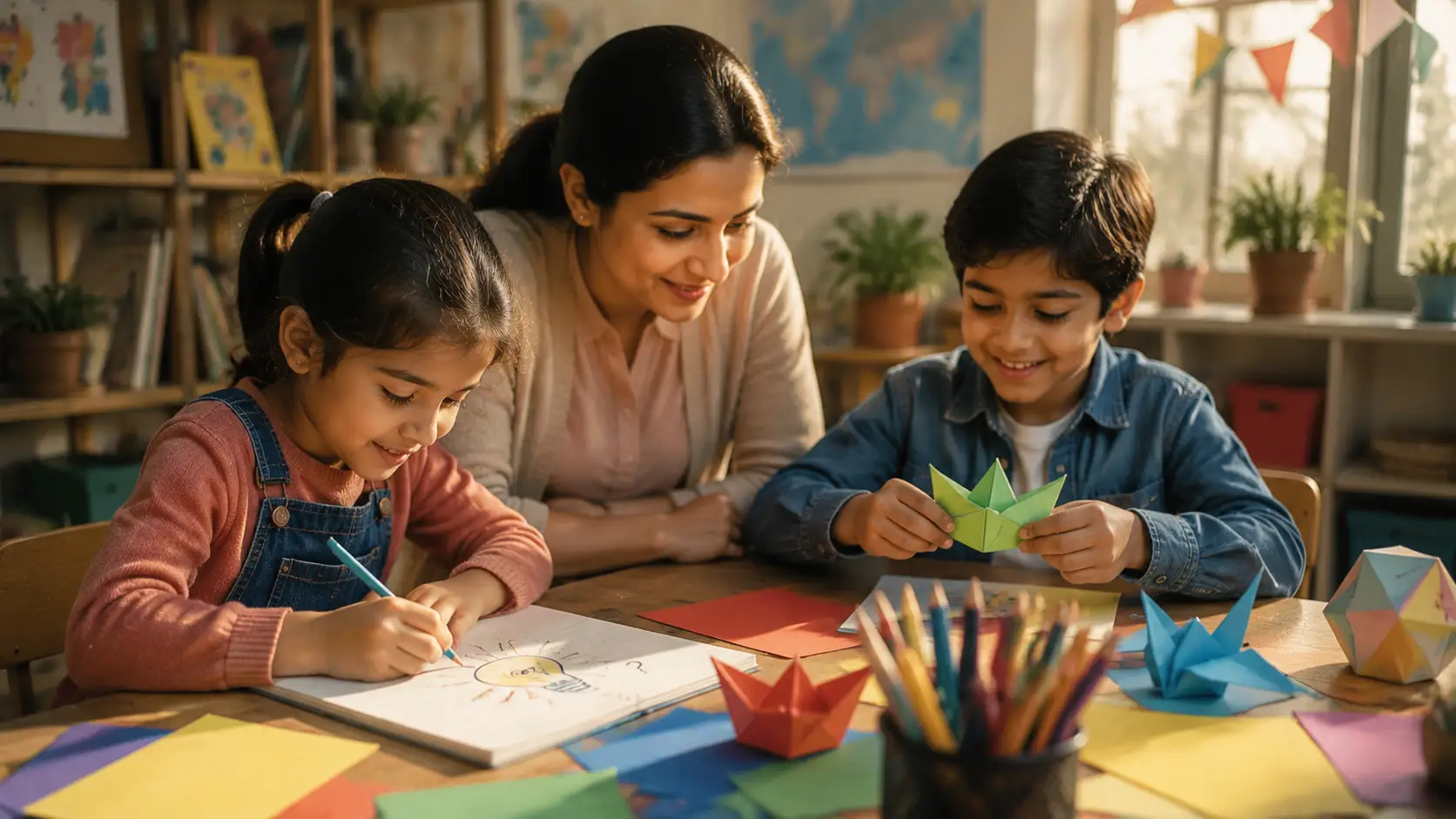
Paper games are a creative game that is not limited to amusement. They provide children with an opportunity to discuss ideas without restrictions. No rules are strict, no one puts the pressure to win, but only the pleasure of creating and sharing.
Such activities assist children:
- Think independently
- Express themselves confidently
- Work collaboratively
- Take pleasure in the learning process
They also facilitate children to assume ownership of their play. They do not have to depend on pre-made games but rather be the creators of their own fun.
In a world where most things are organized and instructed, creative paper games are a refreshing change of opportunity to be creative, experiment, and discover.
And at times, it only takes a sheet of paper to open its doors to a whole new world of possibilities.
Also Read: Employee Engagement Activities
Interactive Supplements – When There’s No Paper, Apps Help
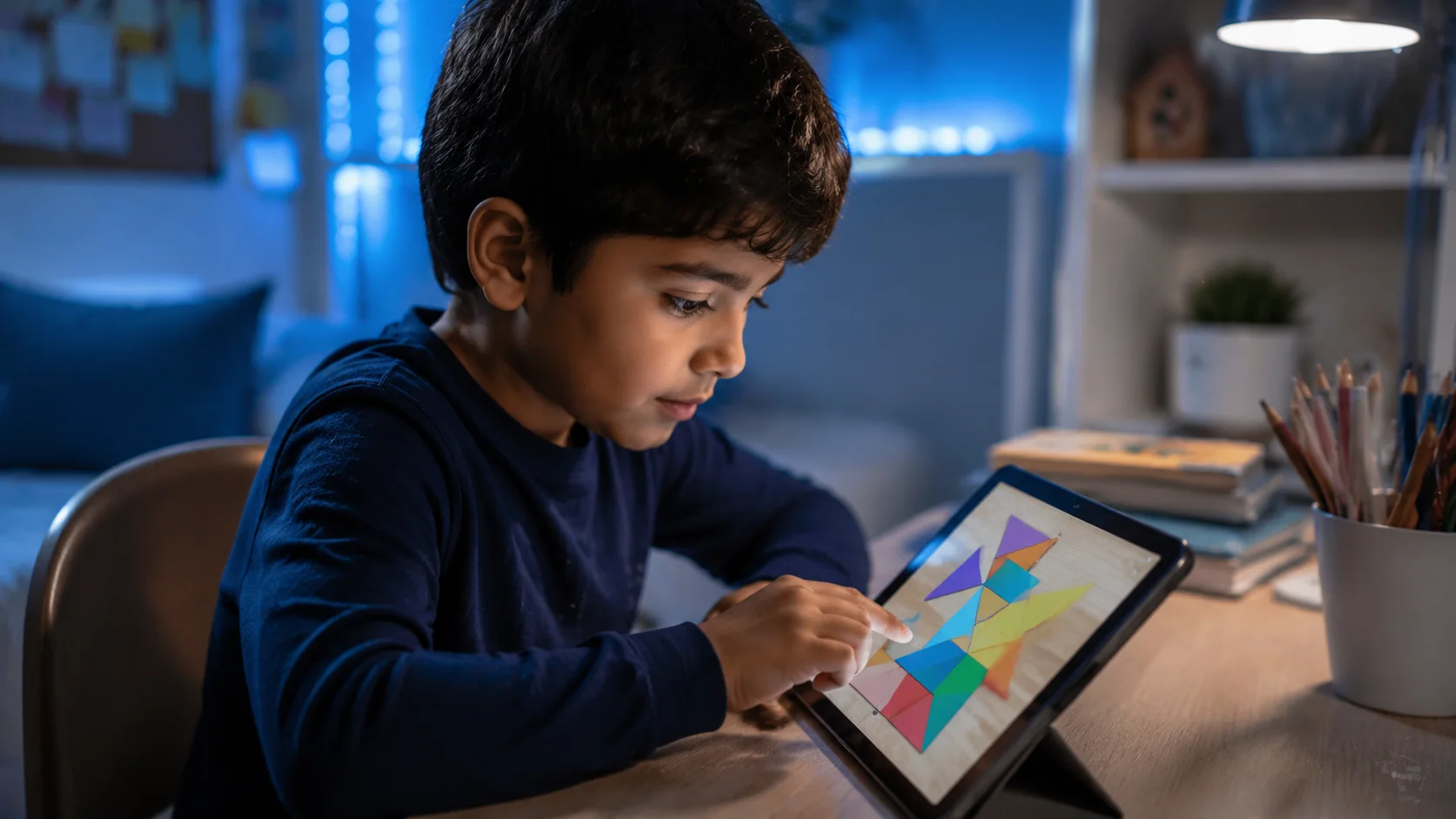
Even digital versions of Paper Games for Kids can support learning when used in moderation.
There will be times when paper isn’t available—during travel, waiting periods, or unexpected situations. In such cases, digital tools can step in as helpful alternatives.
Drawing apps, puzzle games, and word-based challenges can recreate the experience of paper games. Many of them also offer multiplayer features, allowing children to play with friends or family remotely.
However, balance is important.
Digital tools should support—not replace—paper play. While apps provide convenience and variety, paper offers a tactile and sensory experience that screens cannot replicate.
Parents can choose apps that focus on:
- Creativity (drawing, designing)
- Thinking (puzzles, logic games)
- Interaction (guessing and storytelling)
This way, children still benefit from meaningful play—even on a screen.
Also Read: Birthday Party Games for Kids
Tips for Organizing Paper Games for Kids

A little preparation can turn simple paper games into a regular and enjoyable activity.
To get the best results from Paper Games for Kids, keep the setup simple. Children enjoy these games more when they can start quickly, understand the rules easily, and feel free to add their own creative ideas.
Create a Game Kit
Keep a small collection of essentials:
- Papers
- Pencils
- Erasers
- Colored pens or crayons
Having everything in one place makes it easy to start playing anytime.
Choose Age-Appropriate Games
Match the game to the child’s interest and ability:
- Younger kids enjoy drawing and simple games
- Older kids prefer strategy and word challenges
Set Clear Rules
Explain the rules before starting. This avoids confusion and ensures fair play.
It also helps children understand structure and discipline.
Focus on Fun, Not Winning
Encourage participation and enjoyment rather than competition.
Celebrate creativity, effort, and teamwork.
Create a Relaxed Environment
Let children express themselves freely. Avoid too many restrictions.
Paper games work best in a calm and open space.
Join the Fun
When parents or caregivers participate, the experience becomes more meaningful.
It strengthens bonds and shows children that simple activities can be enjoyable for everyone.
Also Read: Importance of Games
Conclusion – Paper Games for Kids
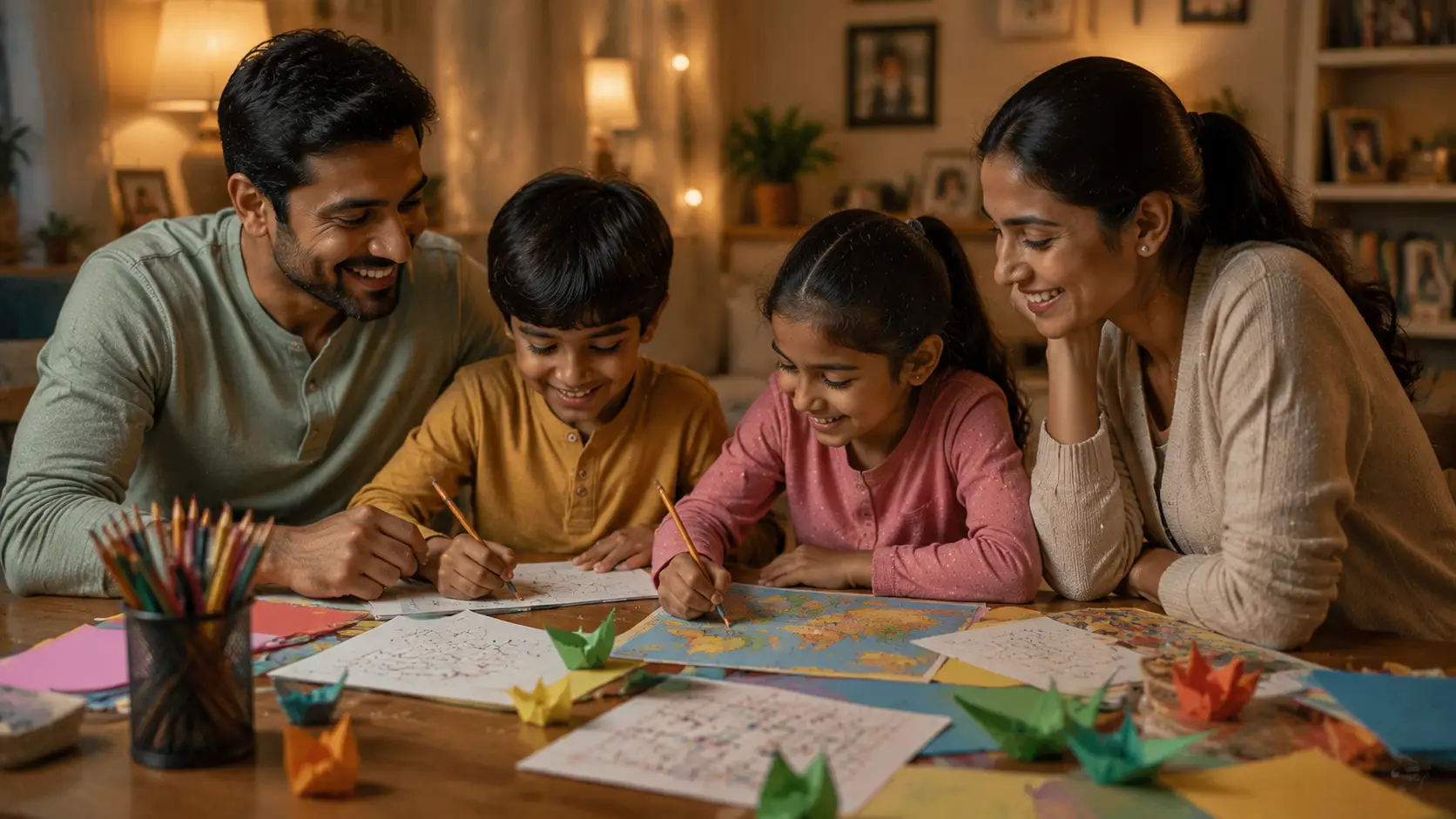
Paper Games for Kids may seem simple, but they offer timeless educational and creative value. These activities help children think independently, improve social interaction, and enjoy meaningful play without relying heavily on screens.
They offer a simple yet powerful way for children to learn, create, and connect. In a world that often feels fast and overwhelming, paper games provide a slower, more thoughtful form of play.
Through these games, children explore ideas, solve problems, and build relationships. They learn to enjoy the process, not just the outcome.
Whether it’s a quick round of tic-tac-toe, a creative drawing challenge, or a fully designed board game, these activities leave a lasting impact.
That is why Paper Games for Kids are still valuable today. They are affordable, screen-free, educational, and easy to customize for different ages, places, and learning needs.
Sometimes, the simplest tools—a sheet of paper and a pencil—create the most meaningful experiences.
Also Read: Indoor Games Name
FAQs About Paper Games for Kids
What are good paper games for a car ride?
Tic-tac-toe, hangman, and dots and boxes are perfect for car rides. They require very little space and are easy to start anytime. For longer journeys, word ladders and drawing games can keep kids engaged for longer periods.
What are the easiest Paper Games for Kids to start with?
The easiest Paper Games for Kids to start with are tic-tac-toe, hangman, dots and boxes, simple mazes, word searches, and drawing guessing games. These games need very little explanation and can be played with only paper and a pencil.
How can paper games help my child learn?
Paper games help develop thinking skills, concentration, creativity, and communication. They also encourage problem-solving, improve vocabulary, and teach children how to interact socially.
Are paper games better than gadgets?
Both have their advantages. Paper games are hands-on, creative, and less distracting, while gadgets offer convenience and variety. A balanced approach works best, allowing children to benefit from both without over-reliance on screens.