
Stuck indoors on a rainy day with nothing planned? Most people start scrolling. The better option is to pick a game. If you’re wondering which indoor games name to try, India has some of the oldest indoor games name in the world, including Carrom and Chess.
India has some of the oldest indoor games in the world. Carrom has been around since the 19th century. Chess originated here. Antakshari has been running at family gatherings longer than anyone can remember. And yet most people only know five or six games by name and rotate between the same ones every time.
This page covers 50+ indoor games name across every category: board games, card games, party games, physical games, word games, and traditional Indian games. There is a quick list of 10 for students who need it for school, a Hindi names table for bilingual reference, and a breakdown by age if you are shopping for a gift or planning a kids’ event.
10 Indoor Games Name (Quick List)
If you just need a fast answer, here are 10 indoor games name that work for almost any group, age or occasion:
| Number | Game name | Best for |
|---|---|---|
| 1 | Chess – classic indoor games name | 2 players, strategy |
| 2 | Carrom – popular indoor games name | 2 to 4 players, skill |
| 3 | Ludo – family favorite indoor games name | Family, all ages |
| 4 | Snakes and Ladders – Ludo – indoor games name | Young kids |
| 5 | Table Tennis – indoor games name | Active players |
| 6 | Monopoly – indoor games name | Groups, strategy |
| 7 | Scrabble – indoor games name | Word lovers |
| 8 | Uno – indoor games name | Fast card game, any group |
| 9 | Jenga – indoor games name | Parties, suspense |
| 10 | Antakshari – indoor games name | Large groups, no equipment |
These ten come up again and again at school events, family nights and office parties. Keep scrolling for a longer list broken down by type and age group.
What Are Indoor Games?
Indoor games, also called indoor games name, are activities played inside a home, classroom, hall, or gym. Some indoor games name require boards and pieces, while others need only people. Some need a board and pieces. Some just need people. They range from purely mental (Chess, Scrabble) to quite physical (Table Tennis, Carrom, indoor Badminton).
The main difference from outdoor games is space and weather. Indoor games do not care if it is raining outside. Most can be played in a single room. Some, like Antakshari or 20 Questions, need no equipment at all.
Why Indoor Games Are Important For Kids’ Growth And Learning
Indoor games are recreational activities you can play at home, school or in any indoor space. Unlike outdoor games that need open fields or large areas, indoor games work in a confined area, regardless of the weather outside. They can be physical, like Table Tennis and Badminton, or mental, like Chess and puzzles, or a bit of both, like Jenga and Carrom.
Playing indoor games name helps kids develop problem-solving skills. Games like Chess and Carrom are classic indoor games name that improve concentration, memory, and social skills.
Benefits of Playing Indoor Games for Kids
- Chess and Carrom ask players to track multiple things at once: their pieces, the opponent’s moves, and the board state. Kids who play these games regularly tend to concentrate better in school, too.
- Jenga teaches decision-making in a way that classroom exercises rarely do. You pick the block, pull it out, and live with what happens next. There is no undoing a bad move.
- Monopoly has ended more friendships than bad days at work, and that is somewhat the point. Negotiating, bluffing, losing without making a scene, and reading other players. All of it happens naturally around a game board.
- Table Tennis and Carrom require hand precision that builds over time. Kids who play regularly show noticeable improvement in coordination after a few weeks.
- Scrabble and Antakshari carry language practice into a game without making it feel like studying. Kids pick up vocabulary and spelling without realising they are doing it.
List of 20 Indoor Games Name with Pictures
1. Chess
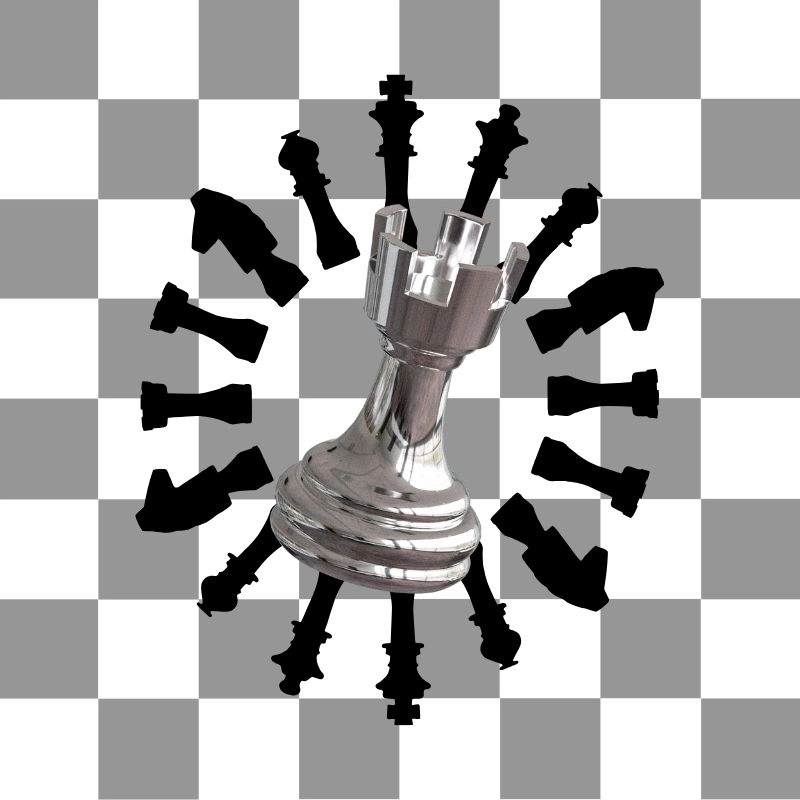
Indoor Games Name: Chess is a two-player strategy game played on an 8×8 board with 64 squares alternating between light and dark. Each player starts with 16 pieces: one king, one queen, two rooks, two bishops, two knights, and eight pawns. Every piece moves differently. The queen is the most powerful, able to move any number of squares in any direction. The king can only move one square at a time, which makes protecting it the whole point of the game.
The goal is checkmate: trapping the opponent’s king so it has no legal escape. Games can end in 10 moves or stretch past 100. There is no dice, no luck, and no hidden information. Both players see everything on the board, which means every loss is a direct result of a worse decision somewhere along the way. That is either motivating or infuriating, depending on your temperament.
2. Table Tennis
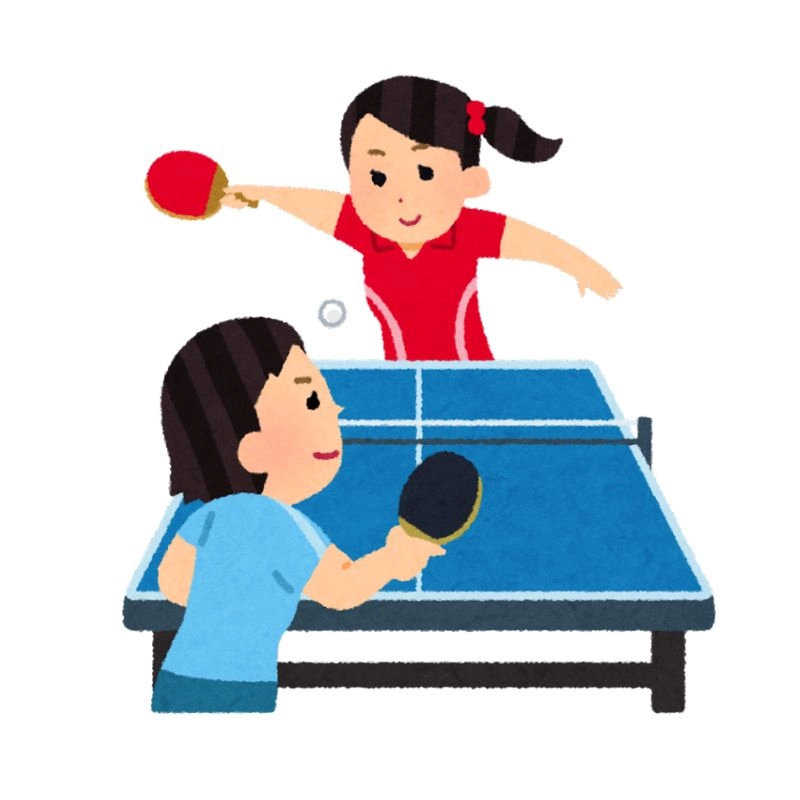
Indoor Games Name: Table Tennis is played on a 9-foot table divided by a low net. Players use small paddles with a rubber surface to hit a hollow plastic ball back and forth. A point is scored when the ball lands on the opponent’s side, and they cannot return it, or when they hit it into the net or off the table.
Singles matches are one-on-one. Doubles matches put two players on each side, with partners alternating hits. A game runs to 11 points, and you need a two-point lead to win. Matches are usually best of five or seven games.
The sport rewards fast reflexes above almost everything else. The ball can travel over 100 km/h in competitive play, which leaves very little time to think. Spin is a big part of the game at higher levels.
Players use different paddle angles and stroke techniques to make the ball curve or bounce unpredictably after it lands. At a casual level, none of that matters much. Two people and a table are enough to have a good time.
3. Carrom
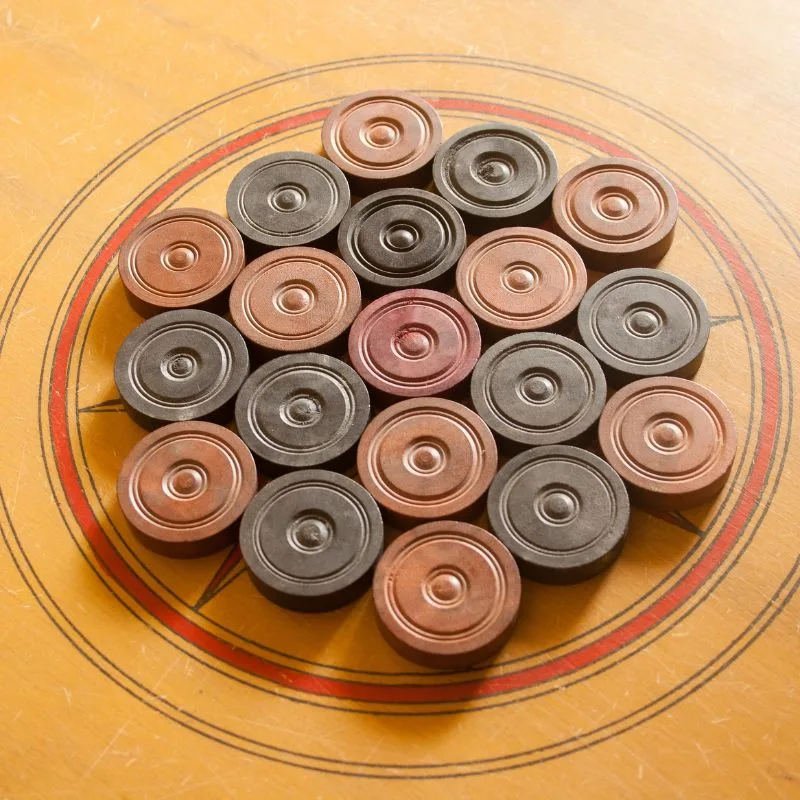
Indoor Games Name: Carrom is played on a square wooden board, roughly 29 inches across, with a pocket at each corner. The playing surface is powdered to keep it smooth. Each player or team has nine discs: black or white, depending on which side they are assigned. There is also one red disc called the queen, which is worth extra points.
Players sit on opposite sides and take turns using a larger disc called the striker to flick their pieces into the pockets. You shoot by placing the striker on the baseline and flicking it with your finger. No lifting the striker off the board, no shooting across the diagonal lines. The rules sound simple until you are actually trying to pocket a specific disc while blocking your opponent from doing the same.
Pocketing the queen requires a follow-up: you must pocket one of your own discs on the same or the next turn, otherwise the queen comes back to the centre. The player or team that pockets all their discs and covers the queen first wins the board.
4. Badminton
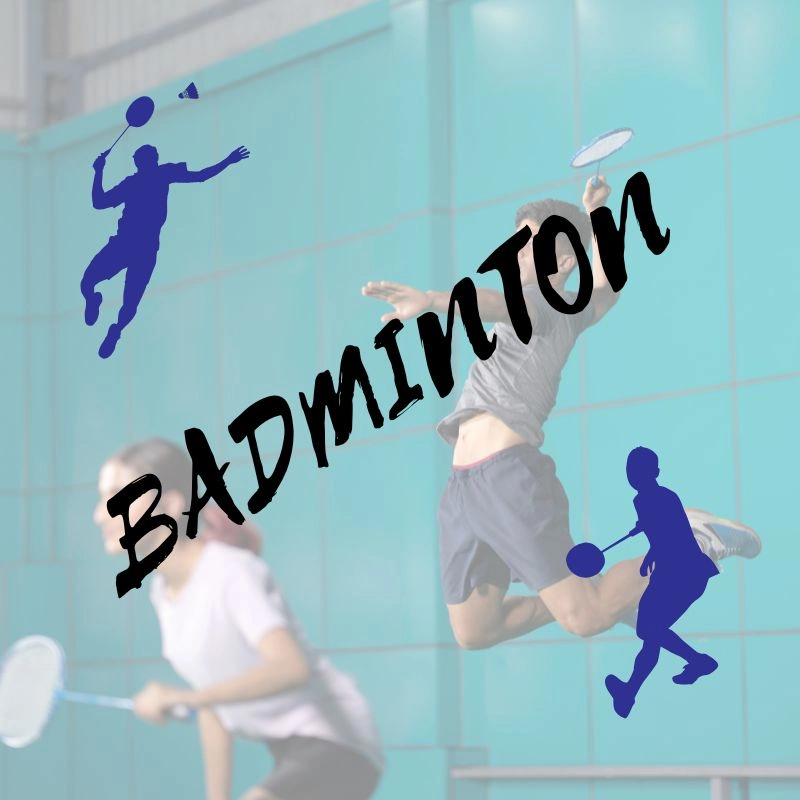
Indoor Games Name: Badminton is played with a shuttlecock, a feathered or plastic projectile that flies differently from any ball in sport. It slows down sharply after a hit and drops faster than you expect, which requires players to adjust their positioning constantly. The net is set at 5 feet in the centre.
Singles matches use a narrower court than doubles. Points are scored on every rally, and a game goes to 21 with a two-point margin required to win. Matches are best of three games. Serving rules are strict: the shuttle must be hit below the waist, with the racket head pointing downward.
The game works indoors or outdoors, but wind is a real problem outside because the shuttlecock is so light. Most serious play happens in indoor courts. Recreational badminton in a backyard or courtyard is a different experience, more forgiving and less precise, but still a good workout.
5. Dominoes Scrabble
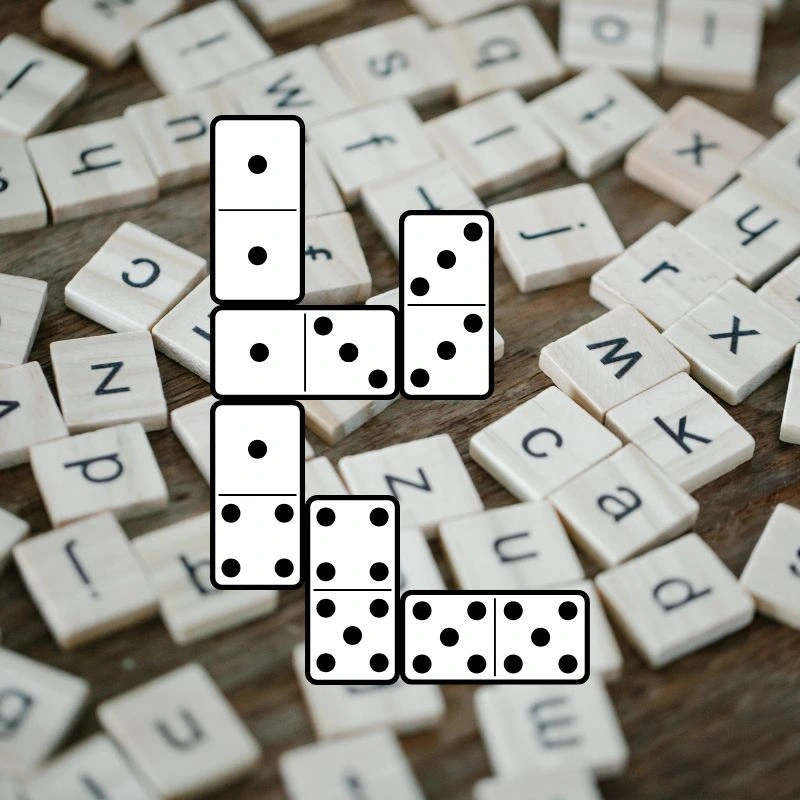
Indoor Games Name: A standard domino set has 28 tiles. Each tile is rectangular and divided into two halves, with each half showing a number from zero to six. The combination of both halves gives you every possible pairing, including doubles like 6-6 or 3-3.
The most common version is Draw Dominoes. Players start with a hand of tiles drawn from the pile. The first player places a tile, and from there, each player must place a tile that matches one of the open ends on the table. If you cannot match, you draw from the remaining pile until you find one that works. The first player to use all their tiles wins.
There are several other versions. Block Dominoes does not allow drawing from the pile. Mexican Train is a popular variant where players build their own chain of tiles alongside a shared central train. The rules vary, but the core mechanic stays the same: matching numbers, blocking opponents, and managing your hand.
6. Monopoly
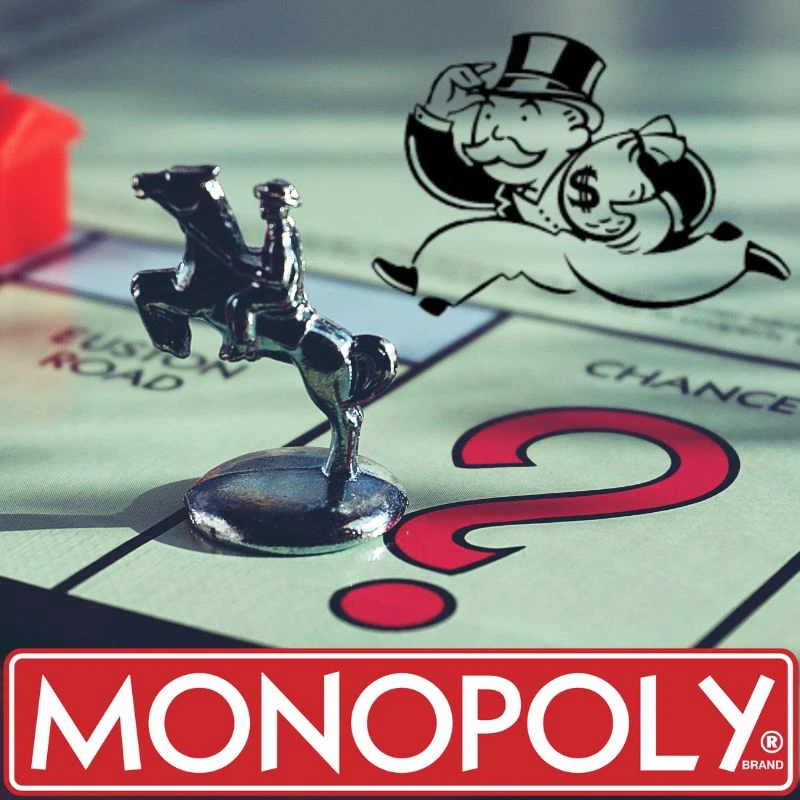
Indoor Games Name: Monopoly is a property trading game for two to eight players. The board has 40 spaces arranged in a loop: properties to buy, tax squares, a jail, utilities, railways, and a few special spaces like Go and Free Parking. Players roll two dice each turn and move clockwise.
When you land on an unowned property, you can buy it. If you do not, it goes to auction. Once you own all properties in a colour group, you can build houses and then hotels, which dramatically increases the rent anyone else pays when they land on it. The financial gap between players widens fast once building starts.
The game ends when all players except one have gone bankrupt. That one remaining player wins. In practice, many games end by agreement when the result becomes obvious, because a full game can run four hours or more.
7. Pictionary
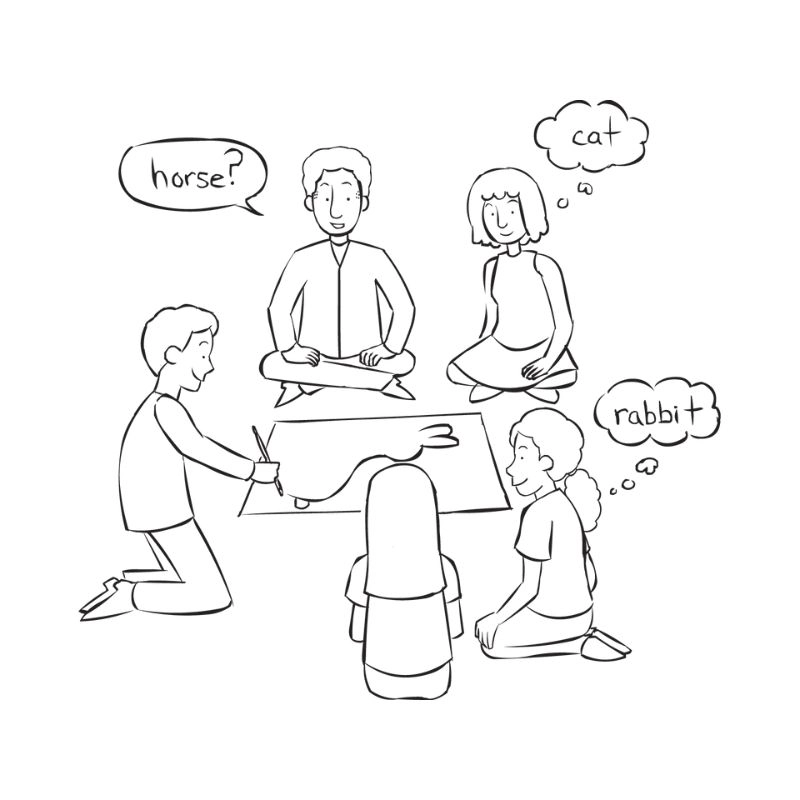
Indoor Games Name: Pictionary is a drawing and guessing game for teams. One player draws a word or phrase from a card while their teammates try to guess it before a one-minute timer runs out. No letters, no numbers, no gestures. Drawing only.
The board version has categories: object, action, person or place, difficult words, and wild cards. Teams move around the board by guessing correctly, and the first team to reach the finish wins. For casual play, most people skip the board entirely and just take turns drawing from a pile of cards or a phone app.
The drawings are usually bad. That is not a problem. A person desperately scrawling something unrecognisable while their team shouts wrong answers is most of what makes the game work. Rounds are short, which keeps the energy up.
8. Ludo Game
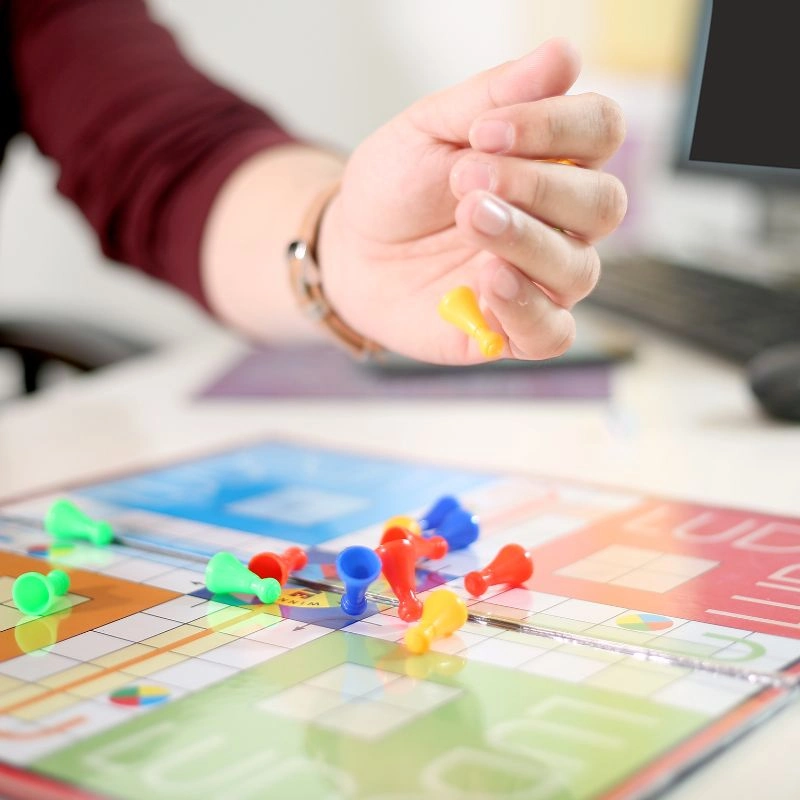
Indoor Games Name: Ludo is played on a square board divided into four coloured sections: red, green, yellow, and blue. Each player controls four tokens that start in their home area. The goal is to move all four tokens around the board and into the centre column, called home. First to get all four tokens home wins.
Movement is controlled by a single dice roll. Tokens travel along the outer track and then turn into the coloured home column that matches their colour. Opponent tokens can be sent back to their starting position by landing on the same square, unless the square is a safe zone marked with a star.
Getting a token onto the board requires rolling a six. Rolling a six also gives you another turn. That mechanic creates a lot of tension early in the game when some players have tokens in play and others are still waiting to start.
9. Jenga
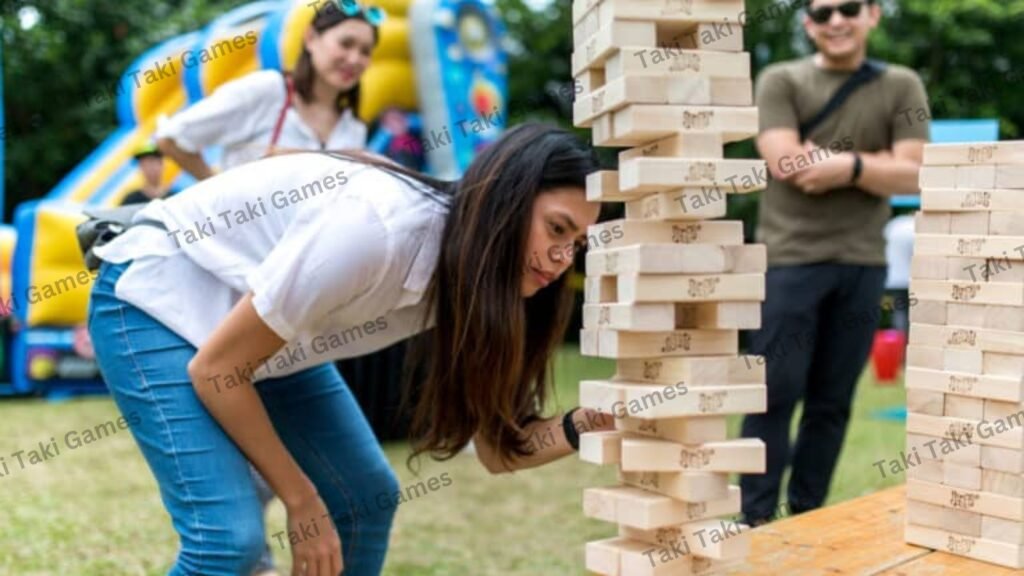
Indoor Games Name: Jenga starts with 54 wooden blocks stacked in a tower. Each level has three blocks, and each level is placed perpendicular to the one below it. The tower starts at 18 levels high and gets taller as blocks are removed from the middle and stacked on top.
On each turn, a player removes one block from anywhere below the top two levels and places it on top. You can use only one hand. You can touch neighbouring blocks to test stability, but must put them back without disturbing the tower if you choose a different one. The player who causes the tower to fall loses.
Early turns are easy. The tower is solid, and there are plenty of stable blocks to choose from. As the game goes on, the tower becomes increasingly unstable and each choice becomes more difficult. Towards the end, the whole structure can lean noticeably before someone finally tips it.
10. Ping Pong
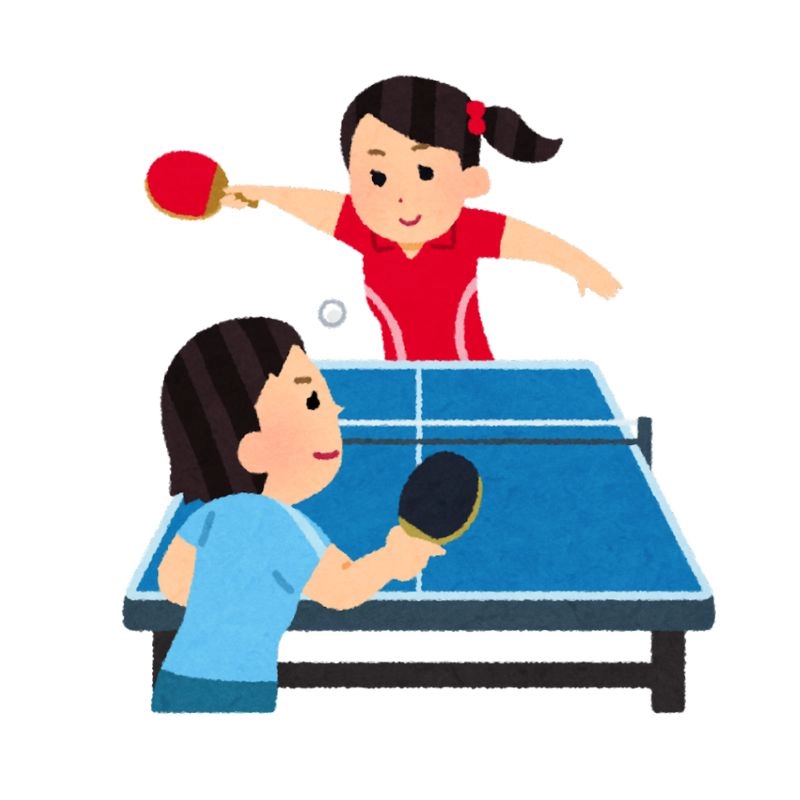
Indoor Games Name: Ping pong and table tennis are the same game. The name ping pong came first, coined in England in the 1800s as an informal name that mimicked the sound of the ball. Table tennis became the official name when the sport was organised and eventually joined the Olympics in 1988.
At a casual level, ping pong is about keeping the ball in play and placing shots where the other person cannot easily return them. At a competitive level, it involves heavy use of topspin, backspin, and sidespin, combined with deceptive paddle angles and fast footwork.
A standard table is 2.74 metres long and 1.525 metres wide. The net is 15.25 cm high. Paddles have a hard wooden base covered in rubber on both sides, and the two sides often have different rubber types for different spin effects. Competitive players take their paddle choice seriously.
11. Billiards/Pool
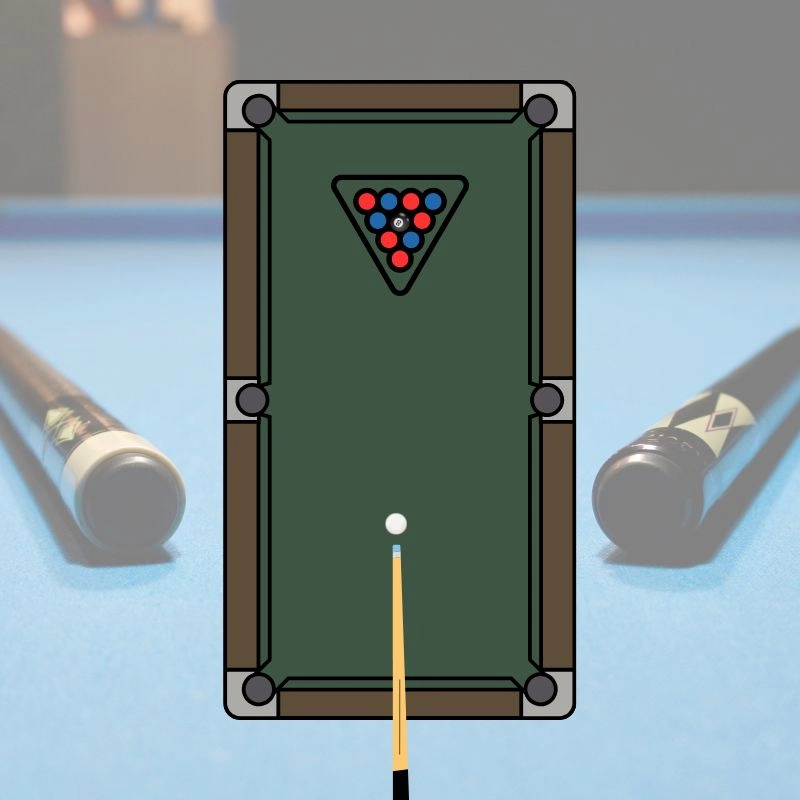
Indoor Games Name: Pool is played on a cloth-covered rectangular table with six pockets, one at each corner and one at the midpoint of each long side. Players use a long, tapered stick called a cue to strike a white ball, called the cue ball, which then hits the coloured balls into the pockets.
The most common version in India and internationally is 8-ball. One player is assigned stripes, the other solids. You must pocket all seven of your balls before shooting the black 8-ball into a called pocket to win. Sinking the 8-ball early, or on the break, usually results in losing.
9-ball is a faster version where players must always hit the lowest numbered ball on the table first, but can pocket any ball on that shot. The player who pockets the 9-ball wins the rack.
A good pool requires understanding angles. The cue ball travels in a predictable direction after impact, and positioning it for the next shot is at least as important as making the current one. Spin applied to the cue ball changes its path after it hits the target, which opens up shots that would otherwise be impossible.
12. Connect Four
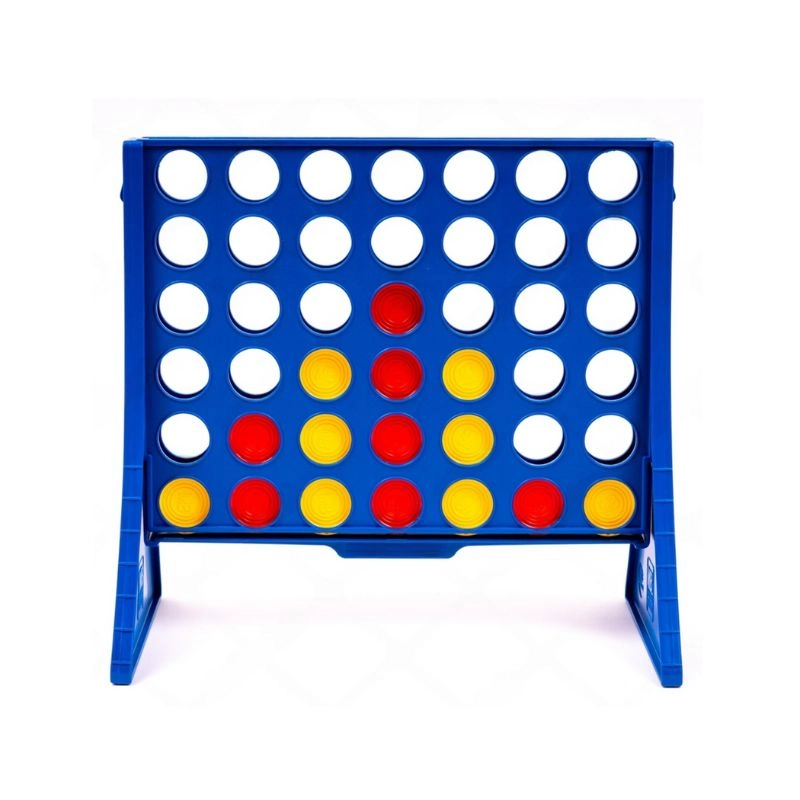
Indoor Games Name: Connect Four is a two-player game played on a vertical plastic grid, seven columns wide and six rows tall. Players take turns dropping coloured discs into any column. The discs fall to the lowest available position in that column. The first player to get four of their discs in a row, in any direction, wins.
The vertical grid is what makes the game interesting. You cannot place a disc in the middle of a column. You must build from the bottom up, which forces you to think about what positions become available as the column fills. Blocking an opponent while setting up your own line is the core tension of the game.
Games are short, usually under 10 minutes. The board resets quickly. Connect Four works well as a game between two people who want something competitive without a long setup. It has also been solved mathematically: the first player wins with perfect play. In practice, most people do not play perfectly, so the outcome stays unpredictable.
13. Checkers

Indoor Games Name: Checkers, also called Draughts in many countries, is played on an 8×8 board using only the dark squares. Each player starts with 12 pieces arranged on opposite sides. Pieces move diagonally, one square at a time. Capturing an opponent’s piece is done by jumping over it, and if a jump is available, taking it is mandatory in most rule sets.
When a piece reaches the far side of the board, it becomes a king. Kings can move diagonally in any direction, not just forward, which makes them significantly more powerful. The game ends when one player captures all the opponent’s pieces or leaves them with no legal moves.
Checkers looks simpler than Chess, and in some ways it is. The rules take about five minutes to learn. The strategy, however, runs deep. Sacrifice plays, forced sequences, and endgame theory are all part of serious checkers play. The game was solved by a computer in 2007, meaning perfect play always results in a draw, but that has not made casual games any less interesting.
14. Taboo
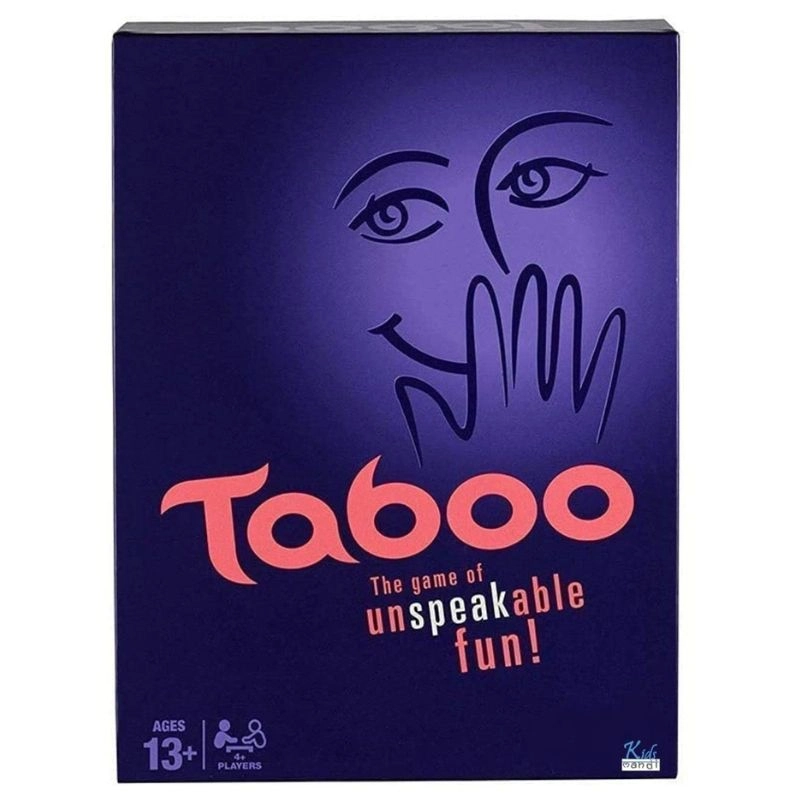
Indoor Games Name: Taboo is a word-guessing game where each card has a target word and five forbidden words listed below it. You get your team to say the target word using any description you want, except you cannot say any of the five listed words, or anything that sounds like them. A member of the opposing team watches your card and buzzes you if you use a forbidden word, costing your team a point.
The forbidden words are the obvious ones. If the target word is “piano,” you cannot say keyboard, music, keys, instrument, or play. You have to find a different angle entirely. That is where the game gets creative. The best players start with unusual associations rather than obvious ones.
Games are timed, usually 60 to 90 seconds per turn. Teams alternate, and the team with the most correct guesses at the end wins. The game plays well with four to eight people and tends to get louder as it goes on. A good game of Taboo usually involves at least one person confidently shouting a wrong answer for 30 seconds straight.
15. Twister
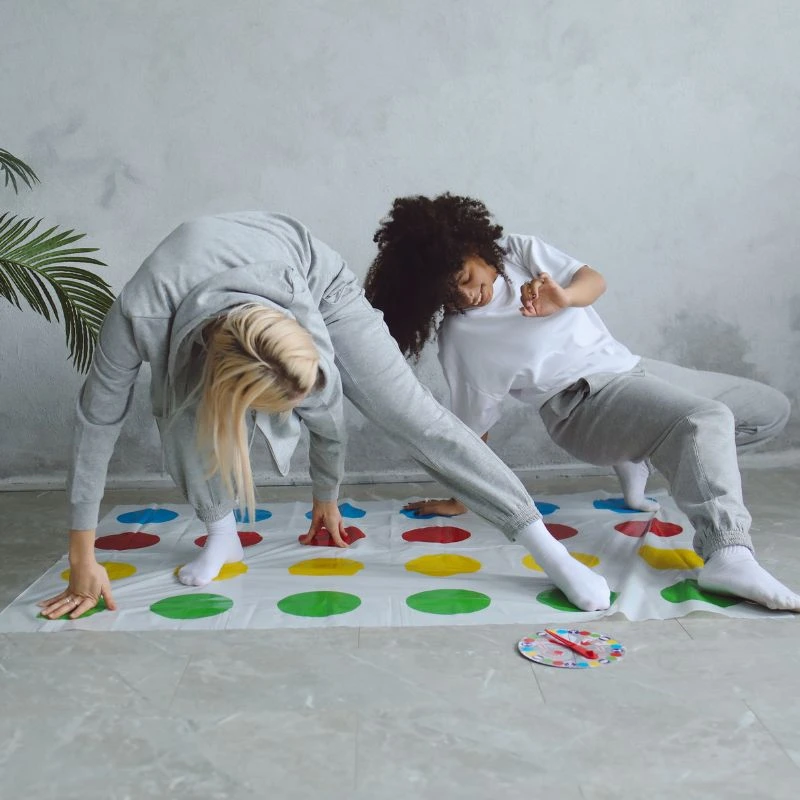
Indoor Games Name: Twister uses a large plastic mat covered in rows of coloured circles: red, yellow, blue, and green. A separate spinner has four sections for left hand, right hand, left foot, and right foot, each subdivided by colour. On each turn, the spinner is flicked and all players must place the called body part on a circle of the called colour, without moving any other limb off the mat.
As more players compete for the same circles and the positions multiply, people end up in increasingly tangled and unstable postures. You are out when you fall or when a knee or elbow touches the mat. The last person still in a legal position wins.
Twister came out in 1966 and caused some controversy when it launched because it required physical contact between players. That reputation mostly faded. It is now considered a standard party game, particularly for groups in their teens and twenties. With younger children, the game tends to end quickly in a happy pile. With adults, it ends in someone’s back giving up.
16. Charades
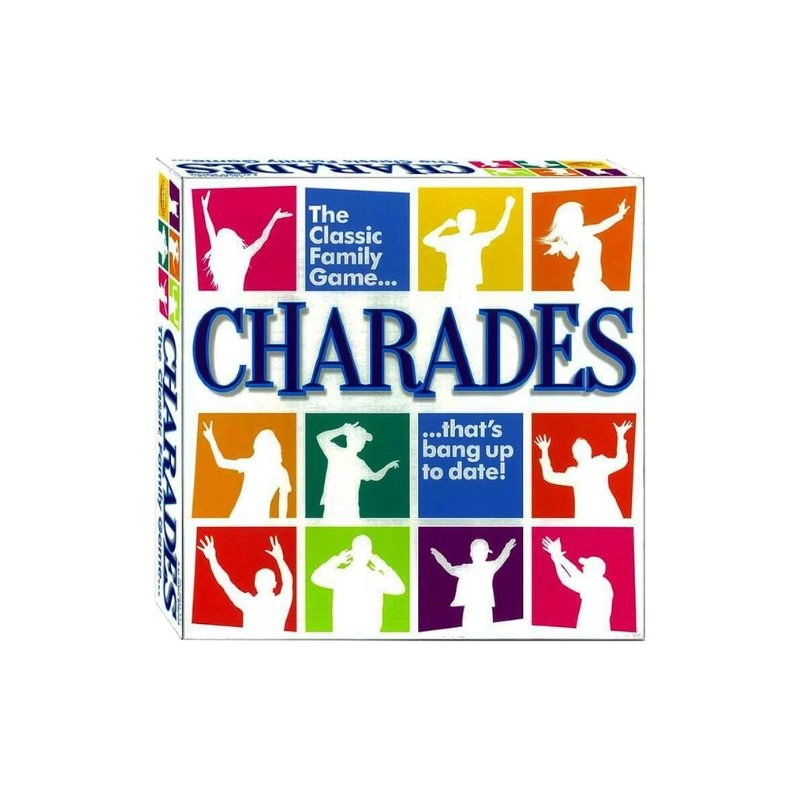
Indoor Games Name: Charades is a guessing game where one person acts out a word, phrase, film title, book name, or song without speaking. The actor’s team must guess correctly within the time limit, usually one to three minutes. No mouthing words, no pointing at objects in the room, no sounds.
There is a standard set of signals used at the start. Holding up fingers indicates how many words are in the phrase. Tugging on the ear means “sounds like.” Making a cranking gesture at the side of the head means the category is a film. Pulling on a finger indicates which word in the phrase you are acting out. Most experienced players know these without being told.
The game needs nothing but people. No board, no cards, no app. A group of five or more works best. Dumb Charades, the version common in India, is a variation where the categories are mostly Bollywood or Hollywood films and the acting tends to be more dramatic. Both versions are better when the titles are genuinely obscure.
17. Snakes and Ladders
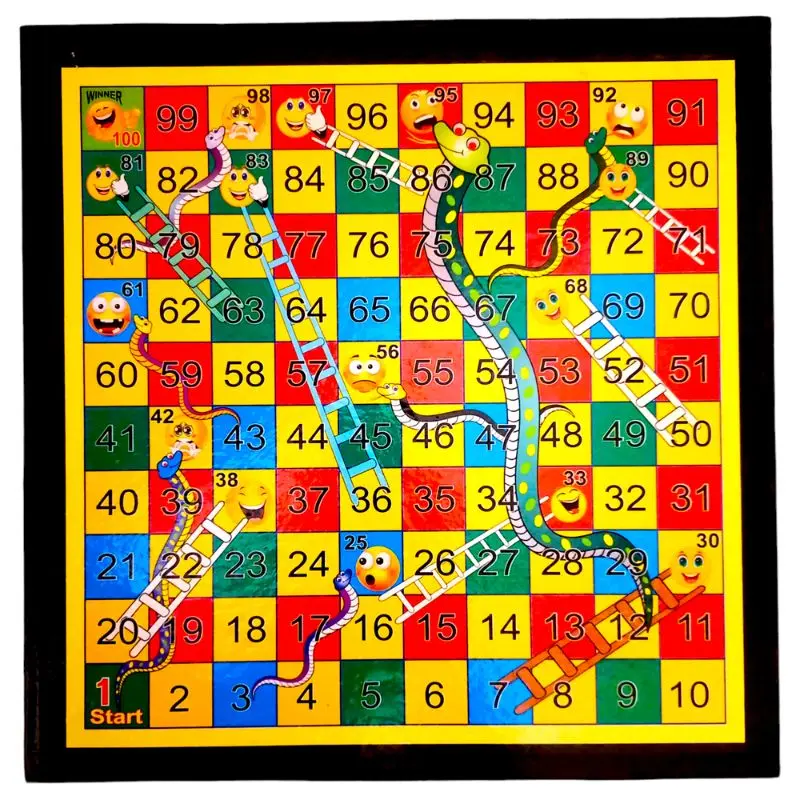
Indoor Games Name: Snakes and Ladders is played on a numbered grid, usually 10×10 with squares running from 1 to 100. Players take turns rolling a die and moving their token forward by that many squares. Land on the base of a ladder and you climb up to a higher square. Land on the head of a snake and you slide down to a lower one.
The game is entirely luck-based. There are no decisions to make beyond rolling. This is intentional. The original Indian version, called Moksha Patam, was a moral game where ladders represented virtues and snakes represented vices. The numbers at the top and bottom of each snake and ladder were chosen to reflect the consequences of specific good and bad actions.
The British version dropped most of that meaning when they adapted it in the 19th century and eventually renamed it Chutes and Ladders in the American market. The game became a standard children’s board game worldwide. It works for very young children because no reading or complex thinking is required, and the outcome changes every time.
18. Kabaddi (Indoor Version)
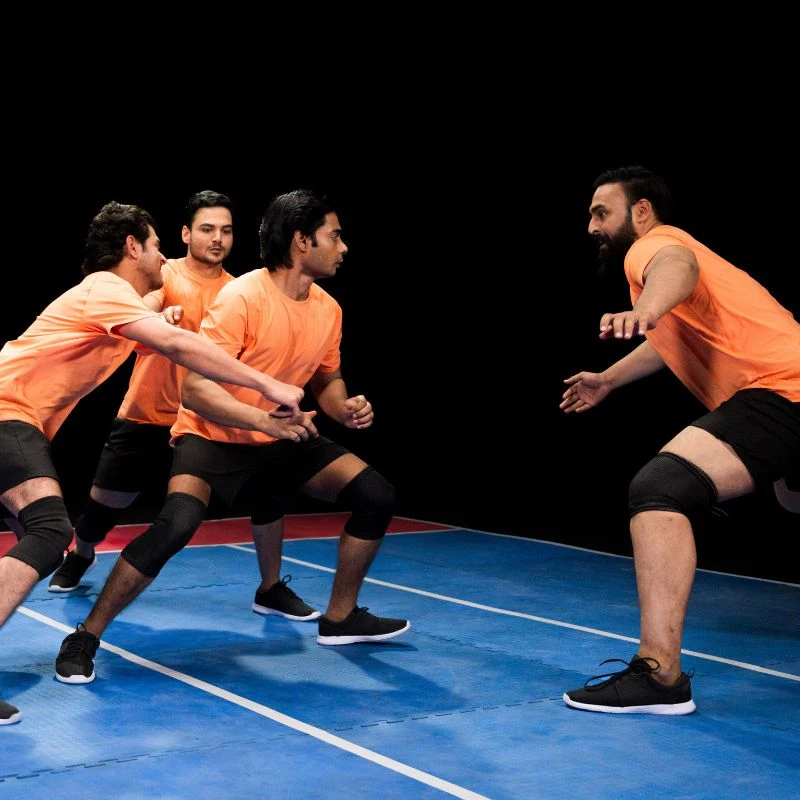
Indoor Games Name: Kabaddi is a contact sport for two teams of seven players each. The court is divided into two halves. One player from the attacking team, called the raider, crosses into the opponent’s half and tries to tag as many defenders as possible before returning to their own half. The raider must do this in a single breath, which they demonstrate by continuously chanting “kabaddi, kabaddi” aloud without stopping.
Defenders try to tackle the raider and prevent them from crossing back. If the raider returns safely, the tagged defenders are out. If the raider is caught before returning, the raider is out. Players who are out can be revived when their team scores points.
The indoor version played at the professional level, including the Pro Kabaddi League in India, uses a mat court with specific dimensions: 13 metres by 10 metres for men. The rules are the same as outdoor Kabaddi with minor adjustments for the surface.
19. Kho Kho
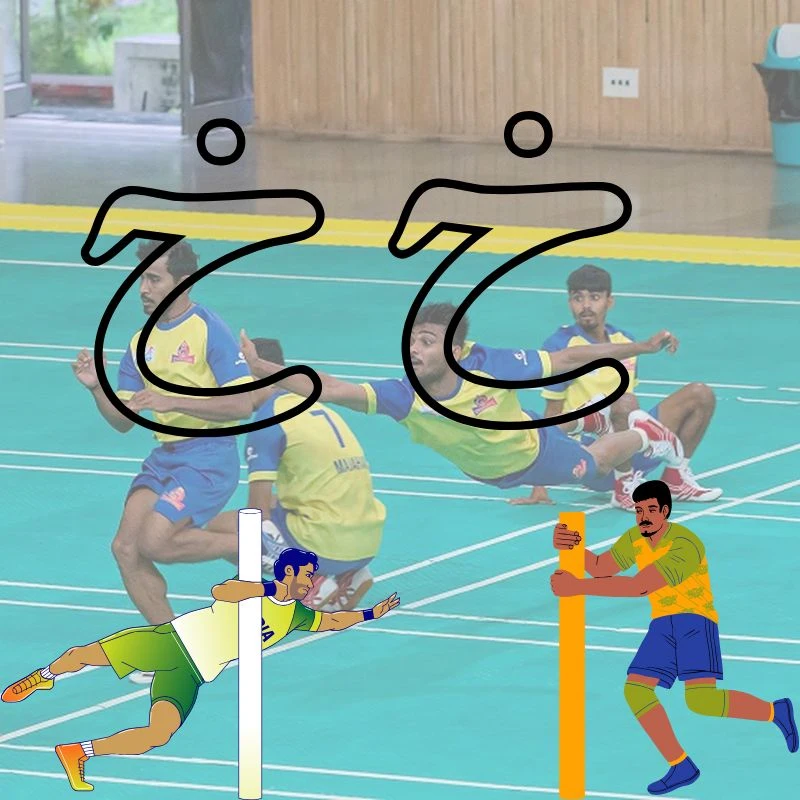
Indoor Games Name: Kho Kho is a tag-based sport played between two teams of 12, with nine players on the field at a time. One team defends and the other chases. The chasing team sits in a row down the centre of the court, alternating the direction each player faces. One active chaser runs after the defenders. When they want to change, they tap a sitting teammate and shout “Kho,” passing the chase to that player.
Defenders try to survive on the field for as long as possible without being tagged. If a defender is tagged, they are out. The chasing team scores points for each defender they eliminate within the time limit. Teams switch roles, and the team with the most points wins.
The indoor version reduces the court size to fit a gymnasium or hall. The rules stay the same but the compressed space makes the game faster and the defenders harder to protect. School gyms across India run Kho Kho as part of physical education because it needs no equipment and can involve a large group at once.
20. Antakshari

Indoor Games Name: Antakshari is a musical game played between two or more teams. One team sings a Hindi film song. When they finish, the next team must immediately begin a new song starting with the last syllable or consonant sound of the previous song. The chain continues until a team cannot think of a song in time or repeats one already sung.
There are no points unless someone decides to keep score. The game runs on memory, speed, and how many songs your team collectively knows. Groups with older members tend to have a deeper catalogue. Younger players sometimes pull out songs the others have never heard, which is usually contested loudly.
No equipment is needed. No setup, no board, no app, no timer. The game starts the moment someone suggests it and runs until people get tired or the bus arrives.
Antakshari has been played at Indian weddings, family gatherings, long train journeys, and school picnics for generations. The television show of the same name, hosted by Sonu Nigam and later others, ran on Zee TV from 1993 to 2006 and introduced a structured competition format to what was originally a purely informal game. The home version remains informal, louder, and considerably less fair.
Also Read: Importance of Sports and Games
Indoor Games Name to Play with Friends
Indoor Games Name: The games-to-play-with-friends question is different from games-to-play-with-family. Friends want something competitive and a little chaotic. These work:
Dumb Charades: Teams take turns. One person acts out a movie or song title without speaking. The team with the most correct guesses wins. No equipment needed, just a phone to pick titles.
Uno: Two to ten players, runs about 20 minutes. Simple enough to explain mid-game. Gets genuinely tense near the end when everyone is down to two or three cards.
Antakshari: No board, no cards, no setup. One team sings a song, and the next team starts a new song from the last letter of the previous one. Works with four people or with a full room at a wedding.
Taboo: Get your team to say a target word without using five banned words. Sounds easy. It is not. Best with four to eight players.
Indoor Scavenger Hunt: Hide objects or clues around a room or building. Takes about 15 minutes to plan, and runs for an hour. A good option for house parties, office events and kids’ birthdays.
20 Questions: One person thinks of something, and everyone else asks yes or no questions to figure out what it is. No setup, works anywhere, gets surprisingly competitive.
If you have more than ten people, Tambola (Housie) is the easiest option to run. Generate number sheets, pick a caller, and it mostly runs itself. Standard choice at school events, family reunions and neighbourhood gatherings.
Also Read: List of Indoor Games
Indoor Games Name in Hindi
For students, teachers and parents searching for indoor games name in Hindi, here is a bilingual reference list:
| English name | Hindi name |
|---|---|
| Chess | शतरंज (Shatranj) |
| Carrom | कैरम (Caram) |
| Ludo | लूडो (Ludo) |
| Snakes and Ladders | सांप सीढ़ी (Saanp Seedhi) |
| Badminton | बैडमिंटन (Badminton) |
| Table Tennis | टेबल टेनिस (Table Tennis) |
| Scrabble | स्क्रैबल (Scrabble) |
| Monopoly | मोनोपोली (Monopoly) |
| Jenga | जेंगा (Jenga) |
| Antakshari | अंताक्षरी (Antakshari) |
| Kabaddi | कबड्डी (Kabaddi) |
| Kho Kho | खो खो (Kho Kho) |
| Pictionary | पिक्शनरी (Pictionary) |
| Tambola / Housie | तंबोला / हाउज़ी |
| Charades | शैरेड्स (Charades) |
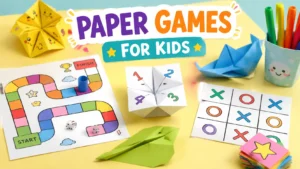
Also Read: Paper Games for Kids
Best Indoor Games for Kids (by age group)
Indoor Games Name: Ages 3 to 6: Snakes and Ladders, Memory Match cards, Simon Says, Candy Land. No reading skills required, simple rules. Kids this age need something with clear cause and effect where they can see results quickly.
Ages 7 to 12: Ludo, Carrom, Uno, Jenga, Pictionary, Scrabble Junior. This is probably the best age window for board games. Kids can follow rules, take turns and handle losing without too much drama. Carrom in particular, builds concentration and hand precision at the same time.
Ages 13 and up: Chess, Monopoly, Taboo, Rummy, Risk. Older kids want real strategy and stakes. These games have enough depth to hold attention for a full evening.
Also Read: Game Zones in Pune
Indoor Games vs Outdoor Games
| A room or a table | Outdoor games | |
|---|---|---|
| Space needed | A room or table | Field, court or park |
| Weather dependent | No | Yes |
| Physical activity | Low to moderate | High |
| Group size | 2 to 20+ | 4 to 100+ |
| Best for | Evenings, rainy days, parties | Open mornings, school grounds |
Outdoor games build stamina and physical coordination. Indoor games build patience, memory and strategic thinking. Both are worth playing regularly.
Types of Indoor Games
Indoor Games Name
Board games: Chess, Carrom, Ludo, Snakes and Ladders, Monopoly, Scrabble. The most common type. Most households already own two or three.
Card games: Uno, Rummy, Bluff, Snap, Poker. A single deck of cards can run a dozen different games, making this the most versatile option for small groups.
Party games: Antakshari, Dumb Charades, Tambola, Pictionary, Taboo. Built for groups. The more people, the better these tend to work.
Physical indoor games: Table Tennis, Carrom, Jenga, Twister, Darts, and indoor Badminton. These need a little more space, but no outdoor court. Easy to forget they count as indoor games.
Word and puzzle games: Scrabble, Boggle, Crosswords, Jigsaw Puzzles. Slower paced, better for smaller groups or solo play.
Conclusion
There is no shortage of indoor games name to choose from. For friends, families, or solo play, pick your favorite indoor games name and start having fun today!
For a group of friends, start with something fast: Uno, Charades or Antakshari. For a family evening, Ludo or Carrom are reliable. For two people with time to spare, Chess is hard to beat. Ten minutes to learn, genuinely difficult to master.
The games on this list do not require much. Most just need a flat surface, a few willing players and a bit of time.
FAQs on Indoor Games Name
What are 10 indoor games name?
Chess, Carrom, Ludo, Snakes and Ladders, Table Tennis, Monopoly, Scrabble, Uno, Jenga and Antakshari. These ten work across most occasions and age groups.
What is the best indoor game to play with friends?
For two to four friends, Uno or Carrom. For groups of six or more, Dumb Charades, Tambola or Antakshari are easiest to run without much preparation.
What are some indoor games name in Hindi?
Chess is शतरंज, Carrom is कैरम, Ludo is लूडो, Snakes and Ladders is सांप सीढ़ी. The full list with Hindi names is in the table above.
Which indoor game is best for young kids?
For children under 7, Snakes and Ladders or Memory Match. For school-age kids, Carrom and Ludo. For teenagers, Chess or Monopoly. The right choice depends more on the child’s patience and attention span than their exact age.
What are 5 indoor games that need no equipment?
Antakshari, Dumb Charades, 20 Questions, Truth or Dare, and Simon Says. None of these needs a board, cards or any setup.
What is an indoor game?
An indoor game is any game played inside a closed space such as a home, classroom, hall or gym. It can be physical, like Table Tennis, mental like Chess, or a mix of both like Jenga or Carrom.