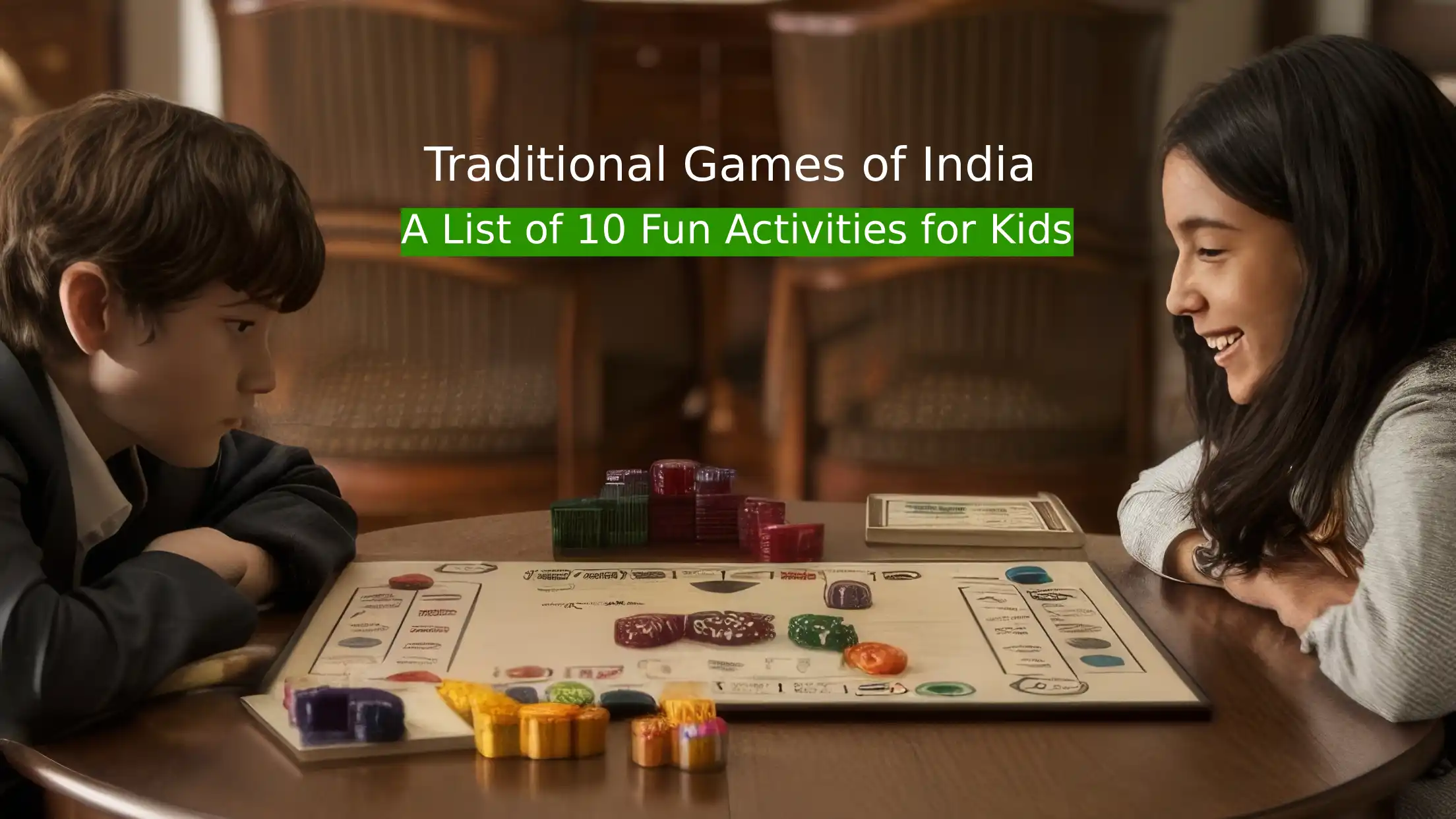
Traditional Games of India: The traditional games constitute an integral component of the cultural legacy of India. At a time when there were no smartphones, no video games and the television was yet to become a source of entertainment, people in villages and towns would spend their nights engaged in games – indoors or outdoors games. Playing outdoors in there open spaces were integral to their daily routine not just for physical exercise and enjoyment but also to foster community bonding and cultivate skills that animals have such as agility, teamwork and thinking.
So, here we go with the list of classic traditional games of India that entertained its citizens for centuries. The games mirror the variety of Indian culture and the ingeniosity of communities scattered across the country. These 10 traditional games of India enable one to understand how simple games turn into a healthy lifestyle and bring people together through social interaction!
Importance of Preserving the Traditional Indian Games
India has a rich tradition of games and sports that go back millions of years. Most of these games and sports originated in villages, and thus were played with simple tools like stones, sticks, chalk lines or wooden boards. But as modern technology and indoor entertainments take over, classic games are gradually vanishing.
Preserving 10 traditional Indian games is crucial because of the following:
Cultural Heritage
These are the traditional games & life style of old generation. We are telling children 10 traditional games of India and in that way are conserving a vital part of our culture.
Community Bonding
Traditional games’ community feeling has been lost. Adults and children all took part, including grandparents and parents.
Simple and Affordable
Unlike many modern sports that now need costly equipment, most of the 10 traditional games of India are played with things easily available.
Physical Fitness
There are a lot of games that have running, jumping and thinking in them that help you to breathe, sweat and keep fit.2-3
These 10 games can be suitably aligned with Indian culture and tradition, which could help a new generation and the old alike master them.
Benefits of Traditional Indian Games for Kids
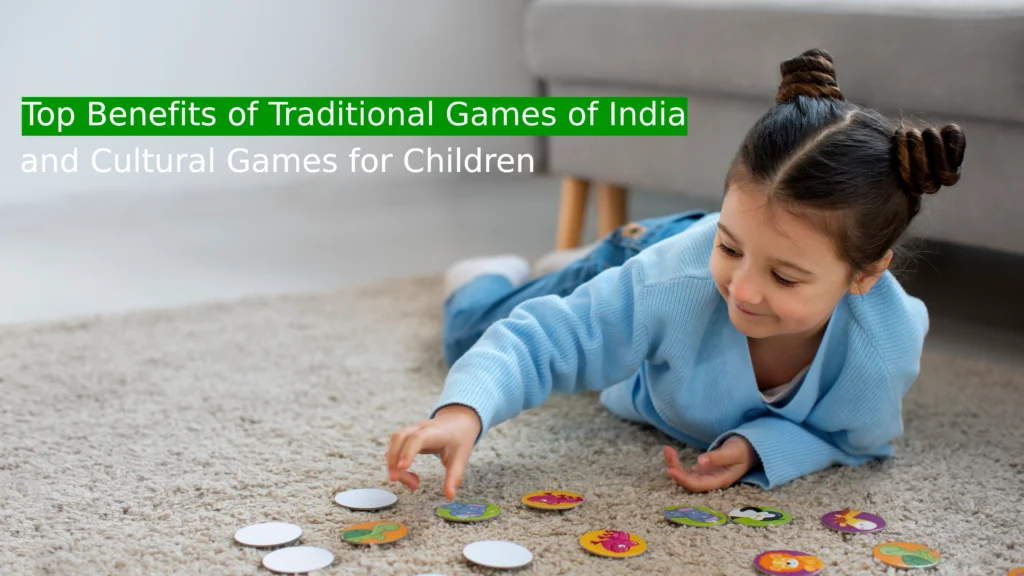
kids to play ten classic Indian games and enjoy the benefits that come with them. These skill based games teach us life lessons and help us grow.
Physical well-being
Outdoor sports like kabaddi and kho kho require you to be agile, have stamina and be fit overall.
Social Competencies
Playing “Together Time,” they’ll begin to learn how to lead, how to collaborate, and how to express themselves.
Mental Growth
Most traditional games require focus, strategy, intelligence, and quick working of the mind.
Decreased Screen Time
The children are taught ten traditional Indian games and instructed to spend more time outside than on devices, on these super stays not far from home.
Emotional Development
Children learn to persevere, be patient, and have sportsmanship by winning and losing. The ten traditional Indian games constitute a perfectly balanced diet for a healthy childhood.
Also Read: Engagement Party Games
Why Introduce Kids to Traditional Indian Games?
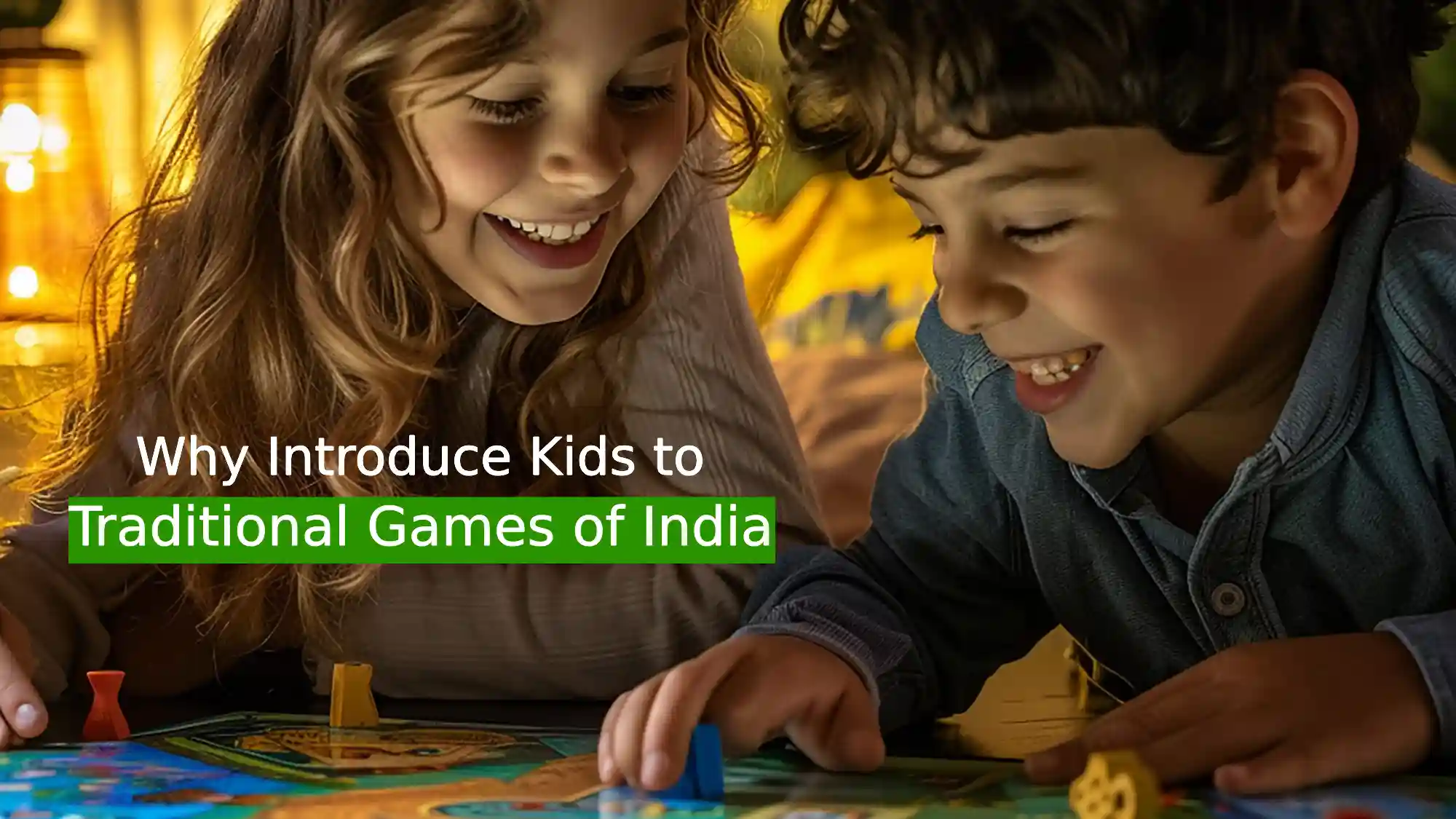
Today children spends gadget many hours in use of gadgets. Even though technology has its good side, spending too much time in front of screen can decreases physical activity and social interaction.
Make a child’s lifestyle more balanced with 10 traditional games of India that he must try. These traditional games not only invoke movement, imagination and team work within children but also help connecting them to their cultural roots.
Top 5 reasons as to why parents and teachers should play 10 traditional games of India with children:
- They foster outdoor play and physical activity.
- They create lasting friendships and cooperation.
- They increase concentration and problem solving.
- These will pave the way for children to gain an understanding of Indian culture and traditions.
- In teaching kids 10 traditional games of India, we ensure that they at least have traditional values to grow with in the modern world of knowledge.
Also Read: Games to Play in Office
Top 10 Traditional Games of India with Pictures
These are some of the popular 10 traditional games of India which kids and grown-ups have been playing across the nation.
1. Kabaddi
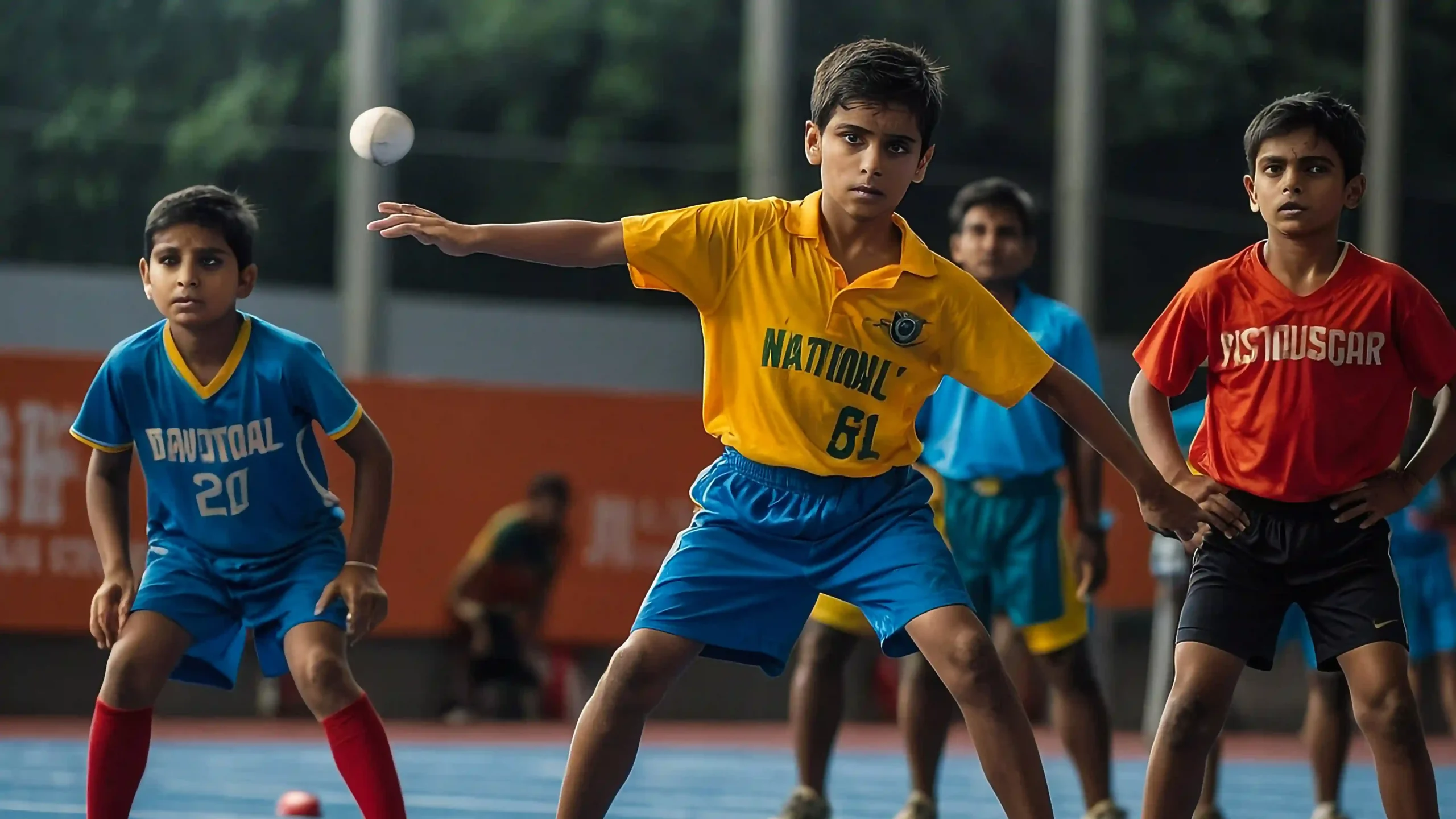
Kabaddi is a popular traditional sport in India. In this team game, the raider enters the rival’s half to tag as much defensive players as possible and come back to his half without being tackled. Also, the raider has to continuously “kabaddi” while holding his breath.
To play kabaddi, you need to have power, stamina, and wit. It is now a professional game in India and very famous in villages, schools, and colleges.
2. Kho Kho
Kho kho is one of the ten oldest Indian sports and a popular outdoors game. In this team warm-up activity everyone must follow a few movement rules in order to tag the opponents.
It requires up to the mark thinking, activeness and swiftness. Kho kho is played at schools and tournaments in India.
3. Gilli Danda
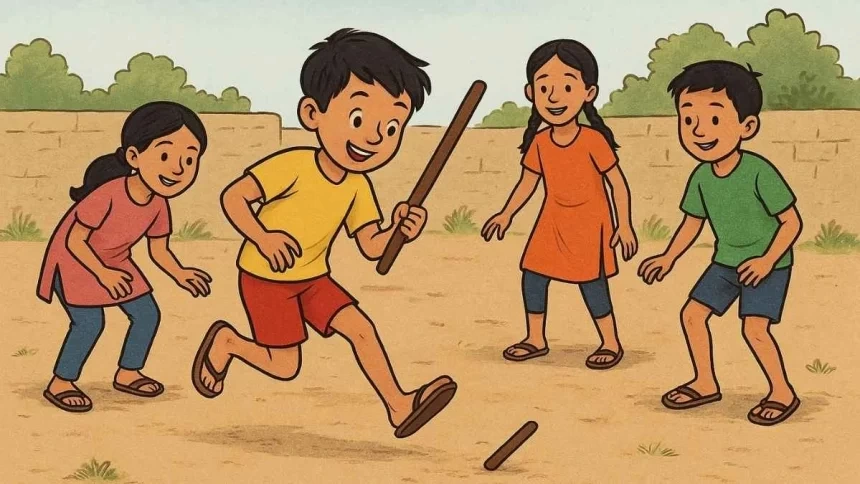
Gilli Danda is often referred to as a country cricket. Two sticks are used to play the game – a longer one known as the danda and a shorter one known as the gilli.
Players hit the gilli with the danda to send it flying in the air. The distance determines the score. One of India’s ten classical games, this simple but exhilarating game has been played for generations.
4. Lagori (Seven Stones)
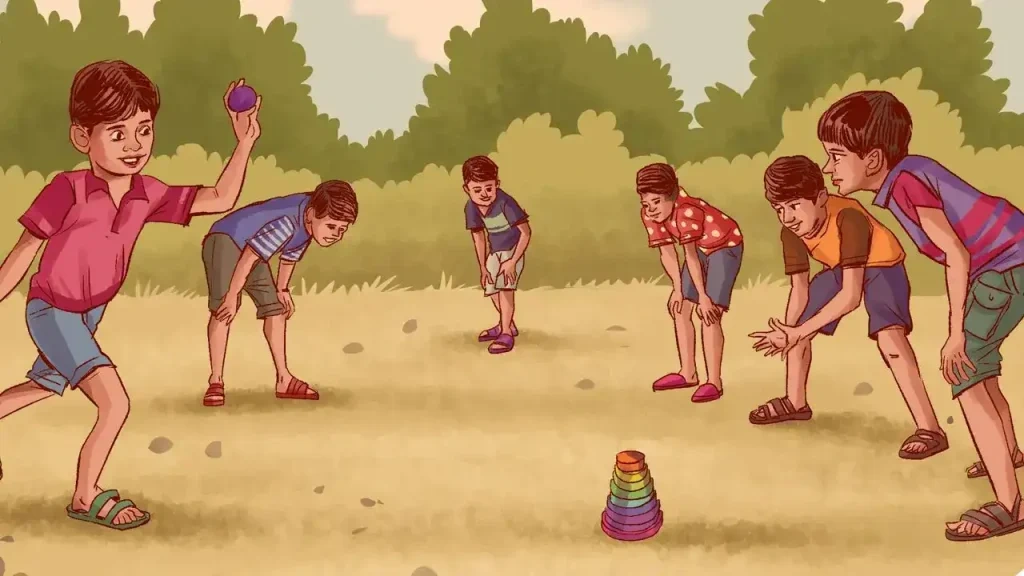
One popular conditon is Lagori, which is also known as Pittu or Seven Stones. The players try to use the ball to bring down seven flat stones placed one over the other.
The second team has to build the pile back up before getting hit by the ball. Lagori is a fun and strategic inclusion in ten classic Indian games. It combines tactics, team-work and speed too.”
5, Kanche (Marbles)
kids in India can relate to the game of marbles kanche. Players also try to hit their opponent’s marbles out of a circle with small glass marbles.
This game needs patience, focus and precision. And the older generation still consider Kanche to be one of the top ten most nostalgic traditional Indian games.
6. Lattu (Spinning Top)
In the traditional toy game of lattu, players spin a wooden top with a thread. The objective is to perform tricks or spin the top for the maximum time.
With five knuckles (fingers) on each hand, this is the special traditional Indian game which develops concentration and hand and eye coordination one among ten traditional games for Indian children.
7. Pittu
Much like Lagori, pittu is a well-liked game among children who play it in parks and playgrounds. A side is given a ball to knock down a pack of stones, and the other team attempts to stop them from reconstructing it.
Since it requires quick reflexes and coordination, pittu is among the ten most exciting traditional games of India.
8. Stapoo (Hopscotch)
Hopscotch (also known as stapoo) is a game where players draw boxes on the ground with chalk and the boxes are numbered.
Players hop on one foot through the sequence (pattern) after throwing a small stone into a box, without landing on any lines and retrieve the stone. It is said to be among the ten best Indian traditional games which you can play anywhere and which improves your balance and coordination.
9.Pachisi
Pachisi is an ancient game which is thought to be the source of modern Ludo. It is played on a 2×2 or 4×4 cross-shaped board commonly with cowrie shells or dice. It was once played by Indian royalty and is still remembered as one of the classic 10 traditional games of India.
10. Chaupar
Yet another classic board game comparable to Pachisi is Chaupar. Strategy and prediction play a key role as players move tokens on a fabric game board. This game is still considered most important in the gaming history of India and was favourite of Mughals.
Also Read: Birthday Party Games for Kids
How Traditional Games of India for Kids Promote Holistic Development
One of the most important reasons to revive 5 Traditional Games of India is their ability to promote holistic development in children.
Physical Development
Outdoor games like Kabaddi and Kho Kho improve stamina, agility, and muscle strength.
| Development Area | Benefits of Traditional Indian Games | Benefits of Traditional Indian Games |
| Physical Development | Improves stamina, agility, and muscle strength | Kabaddi, Kho Kho |
| Cognitive Development | Enhances planning, focus, and strategic thinking | Pachisi, Chaupar |
| Social Development | Builds teamwork, communication, and cooperation | Group-based traditional games |
| Emotional Development | Teaches patience, resilience, and sportsmanship | All traditional games |
| Emotional Development | Helps children understand Indian traditions and values | 10 traditional games of India |
Also Read: Importance of Sports and Games
Conclusion
The traditional games of India are not just entertaining, but a reflection of the country’s culture, its creative imagination, and community living. The 10 traditional games of India covered in this article prove that simple activities can be so much fun and at the same time keep us healthy and help us learn.
Parents and teachers can help preserve cultural traditions and ensure children get active and meaningful play by simply asking kids to play 10 traditional games of India. Bringing back to life these games in school, playground and even at home is a way of preserving this rich legacy for years to come.
Also Read: Games for Kids at Home
FAQs on Traditional Games of India
What are the most popular traditional games of india?
A few among the popular traditional games are Kabaddi, Kho Kho, Gilli Danda, Lagori and Kanche.
What are the top 10 games in India?
Top 10 most popular traditional games in India are Kabaddi, Kho Kho, Gilli Danda, Lagori, pittu, Stapoo, Kancha, Lattu, Pachisi and Chaupar.
What is the name 10 game for kids?
Ten great games that my childhood friends and I loved playing were Kabaddi, Kho Kho, Gilli danda, Stapoo, Lagori, Kanche, Pittu, Lattu, Pachisi and Chaupar.
What is in 100 classic games?
The classic game master pack has board games, card games, and strategic games from around the world, with several traditional Indian games included.